
Understanding how old we are seems simple at first, but the age calculator makes it precise and effortless. Whether you need to know your exact age for official documents, plan a milestone birthday, or track development in children, this tool simplifies everything. In this detailed guide, we will explore all aspects of age calculation, from basic methods to advanced applications that people use daily.
People from all walks of life rely on accurate age information. Parents check their child’s age for school admissions, professionals verify eligibility for jobs or retirements, and individuals celebrate personal achievements. The age calculator has become an essential digital companion that removes guesswork and delivers instant results.
What Exactly Does an Age Calculator Do?
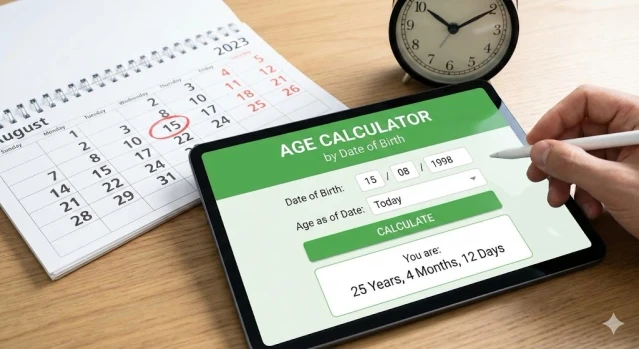
An age calculator determines the time elapsed between two specific dates—usually your birth date and the current date. It goes beyond simply stating years by breaking down the duration into years, months, days, hours, and even minutes. This level of detail proves valuable in many situations.
The process involves subtracting the birth date from today’s date while carefully accounting for varying month lengths and leap years. Modern online versions handle these complexities automatically, providing users with reliable outcomes every time.
Here are some common scenarios where people turn to an age calculator:
- Planning birthday celebrations and milestone events
- Filling out forms that require exact age in years and months
- Checking eligibility for age-restricted activities or benefits
- Tracking pregnancy progress or infant development
- Verifying legal age requirements for contracts or licenses
Different Types of Age Calculations
Not all age calculations are the same. Several approaches exist depending on the context and cultural norms.
Chronological Age represents the most standard method. It measures the exact time passed since birth using the calendar. This is what most official documents require and what typical age calculator tools provide.
Biological Age focuses on the body’s physical condition rather than calendar years. Factors like fitness level, diet, genetics, and lifestyle influence this measurement. While not directly computed by standard calculators, understanding the difference helps people make healthier choices.
Mental or Psychological Age reflects how old a person feels emotionally and cognitively. This subjective measure often differs significantly from chronological age and can change based on experiences and mindset.
In some cultures, age reckoning follows unique traditions. For example, certain East Asian countries traditionally consider a newborn as one year old at birth and add another year at the start of each new year. An effective age calculator can adjust for these variations when needed.
How to Use an Age Calculator Manually
Even without digital tools, you can calculate age using basic arithmetic. Start with the year difference, then adjust for months and days. Remember to account for leap years—years divisible by four (with exceptions for century years) have an extra day in February.
Let’s walk through a simple example. Suppose someone was born on March 15, 1995, and today is July 22, 2026. First, subtract the years: 2026 – 1995 = 31 years. Next, check the months and days. Since July comes after March, no borrowing is needed from the years. The result shows approximately 31 years, 4 months, and 7 days.
For more precision, especially with hours and minutes, digital solutions save significant time and reduce errors. Many free online platforms update automatically with the current date, ensuring accuracy.
Benefits of Using a Reliable Age Calculator
Using an age calculator offers numerous advantages that extend beyond convenience:
- Accuracy: Eliminates manual calculation mistakes that commonly occur with leap years or varying month lengths.
- Speed: Delivers results in seconds rather than minutes of manual computation.
- Versatility: Supports different date formats and can calculate age between any two dates, not just birth to present.
- Accessibility: Available on smartphones, tablets, and computers, making it handy during travel or important meetings.
- Additional Insights: Some advanced versions provide information about zodiac signs, Chinese zodiac animals, or upcoming birthdays.
Professionals in human resources, education, and healthcare particularly appreciate these tools for quick verification without extensive paperwork.
Age Calculator in Legal and Official Contexts
Age plays a crucial role in legal matters. Many countries set minimum ages for driving, voting, consuming alcohol, or entering contracts. An age calculator helps individuals and authorities confirm compliance efficiently.
In education, schools use precise age data to determine appropriate grade placement or eligibility for special programs. Insurance companies calculate premiums based on exact age brackets. Retirement planning also depends heavily on accurate age tracking to maximize benefits and plan timelines.
For international travel or immigration processes, officials often require proof of age calculated to the exact day. Having a trustworthy method ensures smooth handling of these requirements.
Health and Wellness Applications
Age tracking supports better health management. Doctors use patient age to interpret test results, recommend screenings, and prescribe medications safely. Pediatricians monitor developmental milestones against age-specific benchmarks.
Fitness enthusiasts calculate training age—the duration of consistent exercise—to set realistic goals and avoid overtraining. Nutritionists adjust dietary recommendations based on metabolic changes that occur at different life stages.
Pregnancy tracking represents another important application. Expectant parents use specialized calculators to monitor fetal development week by week, helping them prepare for each trimester’s unique needs.
Fun and Educational Uses
Beyond practical needs, age calculators add enjoyment to everyday life. Friends might compete to see who is closest to certain milestone ages or calculate how many days until retirement. Teachers incorporate age-related math problems into lessons to make abstract concepts more relatable.
Genealogy researchers use these tools when analyzing historical records that list ages at specific events. Hobbyists exploring family trees appreciate the precision when reconciling different date formats across countries and eras.
Understanding Leap Years and Their Impact
Leap years significantly affect long-term age calculations. The Gregorian calendar adds February 29th every four years to keep seasons aligned with dates. However, century years are leap years only when divisible by 400. This means 2000 was a leap year, but 1900 was not.
When using an age calculator for people born on February 29th, special handling ensures correct results in non-leap years. Most digital tools manage these exceptions automatically, providing consistent accuracy regardless of the calendar complexities.
Cultural Perspectives on Age
Different societies view age through unique lenses. Some cultures celebrate “coming of age” ceremonies at specific chronological points, while others emphasize wisdom and life experience over numerical age.
In many Western countries, 18 marks legal adulthood, while 21 often signifies full maturity for certain privileges. Eastern traditions sometimes place greater importance on generational roles and respect for elders rather than exact years lived.
An age calculator helps bridge these differences when people from varied backgrounds interact professionally or personally. It provides neutral, factual information that respects cultural contexts while delivering objective data.
Tips for Getting the Most Accurate Results
To ensure precision when using any age calculator, follow these best practices:
- Double-check birth date entries for correct format and spelling of months
- Use reliable sources for current date information
- Consider time zones if calculating exact hours for international purposes
- Verify results against manual calculations for important official uses
- Save or screenshot results when needed for documentation
Always remember that while calculators provide excellent accuracy, official documents should ultimately rely on verified birth certificates or government-issued identification.
Common Challenges and Solutions
Some users encounter difficulties when dealing with incomplete birth information or historical calendar changes. For example, countries switched between Julian and Gregorian calendars at different times, affecting recorded dates.
Advanced age calculator tools often include options for historical date adjustments. When exact birth times are unknown, using the first day of the known month or year provides reasonable estimates while acknowledging the uncertainty.
Mobile users sometimes face compatibility issues with certain websites. Choosing responsive, well-designed platforms ensures smooth experiences across all devices.
Future Trends in Age Tracking
As technology evolves, age-related tools continue to improve. Integration with personal health devices may offer more comprehensive biological age insights. Voice-activated assistants could provide instant calculations during conversations or planning sessions.
Family history applications might automatically cross-reference age data across multiple generations, revealing interesting patterns and longevity trends within family lines.
Despite these advancements, the fundamental need for simple, accurate chronological calculations remains constant. The age calculator continues serving this core purpose while adapting to new user expectations.
Conclusion
The age calculator stands as a practical, reliable tool that enhances decision-making across personal, professional, and legal spheres. By providing precise age information quickly and efficiently, it helps people navigate important life milestones with confidence.
Whether calculating age for a child’s school registration, planning a special celebration, or simply satisfying curiosity about time passed since birth, this tool delivers consistent value. Understanding its various applications empowers users to make informed choices about health, career, education, and relationships.