
Introduction
Mathematics is part of everyday life, from checking shopping bills and calculating discounts to managing budgets, comparing prices, and completing school assignments. Although many calculations can be performed mentally, a reliable calculator can make the process much faster and reduce the chance of mistakes. Modern tools are available in many forms, including basic models for simple arithmetic and advanced versions designed for scientific, financial, engineering, and educational purposes. Understanding which type is suitable for a particular task can save time and make calculations more convenient. A calculator is especially useful when numbers become complicated or when several operations need to be completed in sequence. Instead of spending several minutes working through figures manually, users can enter the required values and receive an answer almost instantly.
What Is a Calculator?
A calculator is a device or digital tool designed to perform mathematical operations. Basic functions generally include addition, subtraction, multiplication, and division, while more advanced models may support percentages, square roots, powers, logarithms, trigonometric functions, statistics, and other mathematical operations. The development of digital technology has made these tools widely available on computers, smartphones, websites, and other devices.
The main purpose of a calculator is to simplify numerical work. It does not replace an understanding of mathematics, but it can make calculations quicker and more convenient. Students can use it to check answers, professionals can use it for financial or technical calculations, and households can use it for budgets and shopping. Because different tasks require different functions, choosing the right type is important for obtaining useful and accurate results.
Types of Calculators
Different calculation needs have resulted in several types of tools. A basic model is suitable for everyday arithmetic, while specialized models offer functions for particular fields. The following table gives a quick comparison.
| Type | Common Use | Typical Functions |
|---|---|---|
| Basic | Everyday math | Addition, subtraction, multiplication, division |
| Scientific | School and technical work | Trigonometry, powers, roots, logarithms |
| Financial | Money management | Interest, payments, investment calculations |
| Graphing | Advanced mathematics | Graphs, equations, functions |
| Online | Quick calculations | Arithmetic and specialized formulas |
| Printing | Business environments | Calculations with printed records |
Selecting the appropriate option depends on the complexity of the work. Someone calculating a grocery total does not need advanced scientific functions, while an engineering student may require a model capable of handling complex formulas.
Why Use a Calculator for Everyday Tasks?
A calculator can save considerable time when dealing with repeated or multi-step calculations. For example, calculating a discount on several products, adding monthly expenses, or dividing a restaurant bill among friends can become inconvenient when performed manually. Entering the figures into a suitable tool provides a quick result and allows users to concentrate on the decision rather than the arithmetic.
Accuracy is another major advantage. Human errors can occur when numbers are copied incorrectly, calculations are rushed, or several operations are performed mentally. A calculator reduces these risks when the numbers and operations are entered correctly. It is still important to review the input because a wrong value will produce a wrong answer. Therefore, the best approach is to combine basic mathematical understanding with the speed and convenience offered by digital calculation tools.
How Students Can Benefit
Students regularly encounter calculations in mathematics, science, economics, statistics, and other subjects. A calculator can help them verify their work and understand whether their final result is reasonable. When studying formulas, students can first solve a problem manually and then use a calculator to check the result. This approach encourages learning instead of simply depending on the tool.
Scientific models can be particularly useful for students working with square roots, exponents, trigonometric values, fractions, and other advanced operations. However, students should understand the underlying formula before entering it. Using a tool without understanding the mathematical process can make it difficult to identify mistakes. Teachers may also have different rules about when calculators are permitted, especially during examinations, so students should always follow the relevant academic requirements.
Calculator Use in Personal Finance
Managing personal finances often involves frequent numerical calculations. People may need to calculate monthly spending, savings targets, discounts, loan payments, taxes, or interest. A calculator can make these tasks easier by quickly processing different values and allowing users to compare possible outcomes.
For example, someone planning a monthly budget can add expected housing, transportation, food, utility, and entertainment expenses. They can then subtract the total from their income to determine how much remains. Similarly, percentage calculations can help shoppers understand discounts or compare price changes. Financial calculations can become more complicated when interest or long-term payments are involved, so users should carefully check the formula and assumptions being used rather than relying only on the displayed number.
Online and Mobile Calculation Tools
Technology has made calculators accessible almost everywhere. Smartphones commonly include built-in calculation applications, while computers and websites provide additional options for specialized mathematical tasks. Online tools can be useful when a person needs a calculation without carrying a physical device.
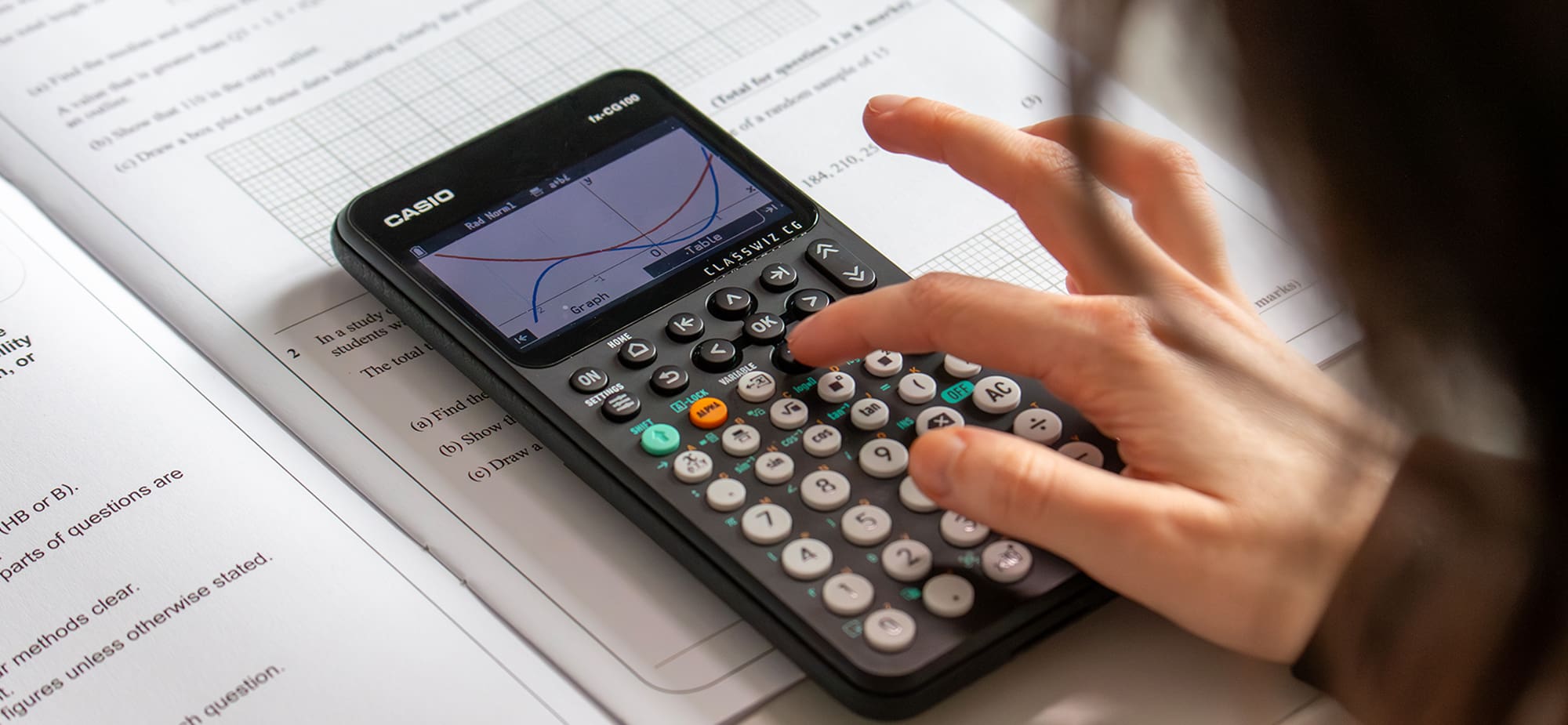 One advantage of digital tools is flexibility. A user may find basic arithmetic, percentage calculations, unit conversions, financial formulas, or scientific functions in one place. However, convenience should not replace careful checking. Users should confirm that the correct operation, units, decimal values, and order of operations have been entered. A clear interface is also important because complicated layouts can increase the possibility of entering the wrong number.
Important Features to Look For
When selecting a calculation tool, consider the type of work you regularly perform. Basic users may only need large, clearly labeled buttons and standard arithmetic functions. Students and professionals may need additional mathematical capabilities.
Useful features can include:
- Percentage and square-root functions
- Memory functions for repeated calculations
- Scientific or statistical operations
- Clear display and easy-to-read numbers
- Support for parentheses and order of operations
- Reliable performance and straightforward controls
The most advanced option is not always the best choice. A simple tool can be more convenient when the task involves only everyday arithmetic.
Common Mistakes to Avoid
Even though calculators are designed to provide accurate results, users can still make mistakes while entering information. A misplaced decimal point, incorrect sign, or forgotten bracket can completely change the answer. This is particularly important in multi-step calculations where one incorrect input affects every subsequent operation.
Users should read the display carefully before accepting the result. It is also useful to estimate the expected answer mentally. If a calculation produces an unusually large or small number, checking the inputs can reveal a mistake. Understanding order of operations is equally important because multiplication, division, addition, and subtraction may not always be performed in the sequence a person expects.
Calculator vs. Mental Math
A calculator and mental math serve different purposes. Mental arithmetic is valuable for quick estimates and helps develop numerical confidence. It can be useful when calculating a small tip, estimating a shopping total, or checking whether a result appears sensible. A calculator becomes more useful when numbers are large, formulas are complicated, or precision is important.
Using both approaches together is often the most effective strategy. Mental estimation provides a rough expectation, while the calculator provides a precise result. If the two appear dramatically different, the user can investigate the calculation before making a decision.
How to Get More Accurate Results
Accuracy begins before the calculation itself. First, identify exactly what needs to be calculated and make sure all numbers are written correctly. Next, select the appropriate mathematical operation and enter the figures carefully. For complex problems, breaking the calculation into smaller stages can make errors easier to identify.
After receiving the result, consider whether it makes practical sense. For example, if a 20% discount is applied to a product costing ₹1,000, the discount should be around ₹200, not ₹20 or ₹2,000. This type of quick estimate provides an additional layer of verification. A calculator is a powerful convenience, but careful input and sensible checking remain essential.
The Role of Calculators in Modern Life
Calculators have evolved from simple electronic devices into versatile digital tools. They are now used in education, business, construction, science, engineering, finance, shopping, and household planning. Their widespread availability means that numerical information can be processed quickly without requiring users to perform every operation manually.
At the same time, mathematical understanding remains important. Knowing what calculation is required, which numbers should be used, and how to interpret the final answer is more valuable than simply obtaining a number. Modern technology works best when it supports human reasoning rather than replacing it.
Conclusion
A calculator is one of the simplest and most practical tools for handling numbers. From basic household arithmetic to advanced scientific and financial work, it can save time, improve convenience, and reduce calculation errors. The right choice depends on the user’s needs, whether those involve everyday expenses, schoolwork, professional formulas, or detailed financial planning. By entering information carefully, understanding mathematical operations, and checking unusual results, users can get much more value from these tools. Whether used on a phone, computer, website, or physical device, a calculator remains an important part of modern numerical problem-solving.