
A calculator is one of the most practical digital and electronic tools for handling mathematical problems quickly and accurately. From simple addition and subtraction to percentages, fractions, financial estimates, scientific formulas, and advanced calculations, it can support people in many different situations. Students use calculators to check mathematical work, professionals use them for planning and analysis, and everyday users rely on them for budgets, shopping, measurements, and household decisions. Although basic arithmetic can often be performed mentally, a dedicated tool can save time and reduce avoidable calculation mistakes. Modern versions are available on computers, smartphones, websites, and dedicated handheld devices, making mathematical assistance accessible almost everywhere. Understanding the different types, functions, and appropriate uses of these tools can help users choose the right option for their needs and make better use of its capabilities.
What Is a Calculator?
A calculator is a device or software application designed to perform mathematical operations. Basic models generally handle addition, subtraction, multiplication, and division, while more advanced versions can perform percentages, powers, roots, logarithmic operations, trigonometric functions, statistical calculations, and other mathematical tasks. Digital calculators can also include memory functions, history features, unit conversions, and specialized modes for particular professions or academic subjects.
The main purpose of a calculator is to make numerical work faster and more reliable. Instead of completing a long calculation manually, users can enter numbers and mathematical operators to receive a result almost instantly. However, the quality of the answer still depends on entering the correct values and selecting the appropriate operation. For this reason, calculators are best viewed as useful tools that support mathematical thinking rather than replacements for understanding basic concepts.
How a Calculator Works
At a basic level, a calculator receives numerical input, processes the requested mathematical operation, and displays the result. Electronic models use internal circuits and processors to interpret the buttons pressed by the user. Software-based versions perform similar tasks through computer or mobile-device processing systems.
When a user enters an expression, the system follows mathematical rules to determine the appropriate order of operations. For example, multiplication and division are normally handled before addition and subtraction unless parentheses change the order. More advanced systems may interpret complex expressions involving powers, roots, trigonometric functions, or logarithms. The result is then displayed on a screen.
Modern applications may provide additional information, such as calculation history or intermediate values. These features are particularly helpful when working with multiple calculations because they allow users to review previous entries and identify mistakes.
Different Types of Calculators
There are several types designed for different levels of mathematical work. A basic calculator is suitable for everyday arithmetic such as adding expenses, calculating discounts, or checking totals. It usually has a simple layout that makes common operations easy to access.

A scientific model is designed for students, engineers, researchers, and other users who need more advanced mathematical functions. It can support trigonometry, logarithms, exponents, fractions, statistics, and other operations. Graphing models go further by allowing users to visualize equations, functions, and mathematical relationships.
Financial models are designed around business and money-related calculations. They may include functions for interest, cash flow, depreciation, loans, investments, and other financial concepts. There are also specialized versions for construction, engineering, accounting, education, and other professional fields. Choosing the appropriate type depends on the complexity and frequency of the calculations a person needs to perform.
Everyday Uses
A calculator can be useful in many ordinary situations. Someone shopping at a store can use it to compare prices, calculate discounts, estimate taxes, or determine the final cost of several products. At home, it can help with household budgets, utility estimates, cooking measurements, renovation calculations, and personal expense tracking.
Students may use basic mathematical functions while studying arithmetic, algebra, geometry, or statistics. Workers can use numerical tools to estimate quantities, calculate percentages, review invoices, or prepare business figures. Even simple tasks such as determining how much money remains after several purchases can become easier with quick calculations.
The convenience of having a calculator on a smartphone or computer means users do not always need a separate physical device. This makes it particularly useful for people who frequently work with numbers throughout the day.
Benefits for Students
For students, calculators can be useful when they are used alongside proper mathematical learning. They can help verify answers, explore numerical relationships, and reduce the time spent on repetitive arithmetic. When solving complex problems, students can focus more attention on understanding the method rather than repeatedly performing lengthy calculations.
However, students should not depend on calculators for every mathematical task. Learning fundamental arithmetic, estimation, equations, and problem-solving remains important. A calculator is most valuable when it complements knowledge rather than replacing it.
Teachers may also use advanced mathematical tools to demonstrate concepts. For example, students can enter different values into a scientific calculator and observe how changing an input affects the result. This can make abstract mathematical ideas more practical and easier to investigate.
Financial and Budgeting Applications
Managing money often involves percentages, totals, interest rates, and comparisons. A calculator can make these tasks easier by providing quick numerical results. People can calculate monthly expenses, compare income and spending, estimate savings, and determine how a discount changes the price of a product.
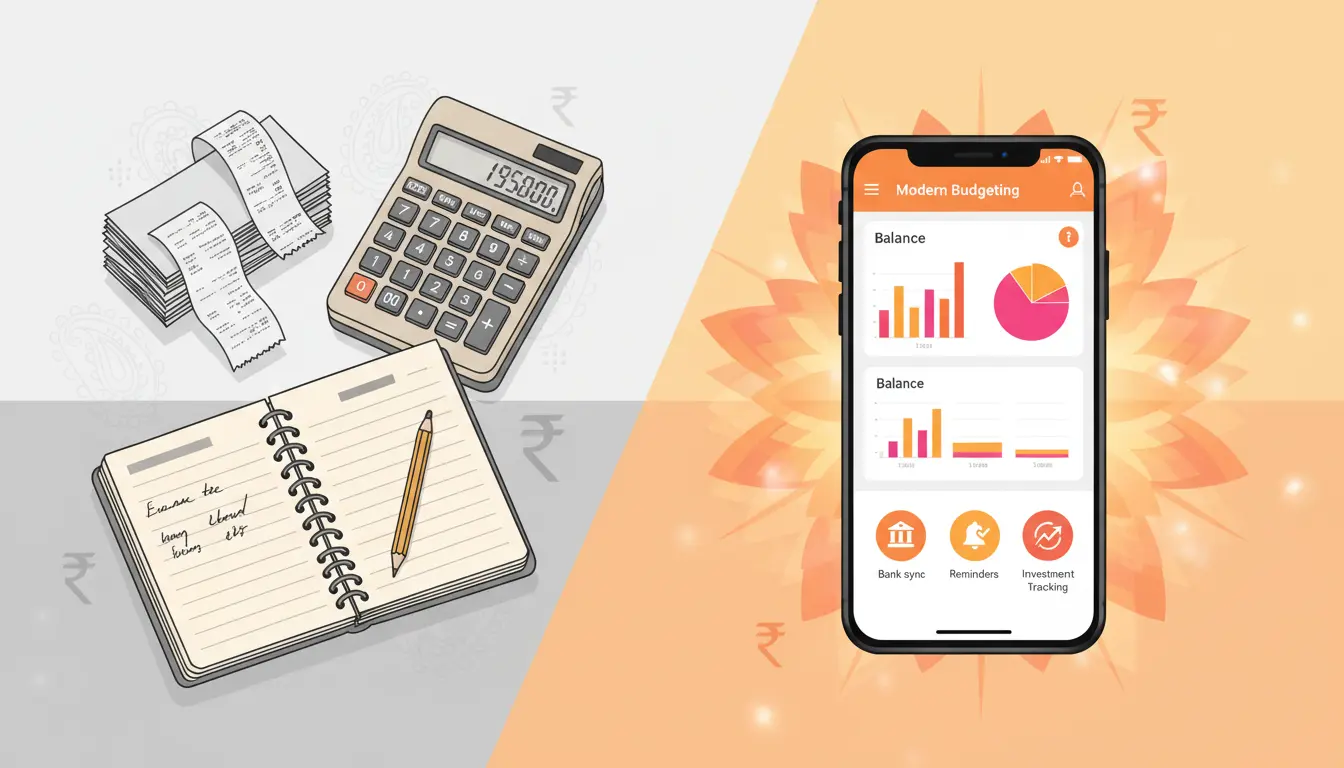
Businesses also depend heavily on numerical calculations. Employees may calculate revenue, costs, profit margins, taxes, inventory quantities, or payment amounts. Financial professionals may require specialized tools capable of handling more complex formulas.
Although these tools improve speed, users should still verify important financial calculations. Incorrect inputs, misunderstood percentages, or inappropriate assumptions can produce misleading results even when the arithmetic itself is performed correctly.
Calculator Features to Look For
The best features depend on the intended purpose. For basic use, a clear display, large buttons, memory functions, and straightforward operation may be enough. Students working with advanced mathematics may need fraction handling, scientific notation, trigonometric functions, and equation-related features.
Digital calculators can offer additional advantages, including calculation history, copy-and-paste support, keyboard input, and compatibility with different devices. Some applications can handle very large or very small numbers and display results in different formats.
Users should prioritize clarity and reliability rather than choosing an option simply because it has the largest number of functions. An overly complicated interface may make simple calculations slower. The ideal tool is one that provides the necessary capabilities without creating unnecessary complexity.
Using Calculators Accurately
Accuracy begins with careful input. A single misplaced decimal point or incorrect number can completely change a result. Users should therefore read the expression before pressing the final calculation button and check whether the displayed answer is reasonable.
Estimation is another useful habit. Before calculating an exact result, users can make a rough prediction. If the final answer is dramatically different from the estimate, they should review the calculation for possible errors.
Parentheses can also be important when working with multiple operations. Entering an expression incorrectly can change the order in which operations are performed. Understanding basic mathematical rules helps users recognize whether a displayed result makes sense.
Digital Calculators and Mobile Devices
Smartphones and computers have made mathematical tools extremely accessible. Many devices include built-in applications capable of switching between basic and scientific modes. Online versions can also provide specialized functions for percentages, dates, measurements, finance, mathematics, and other purposes.
Digital tools can be especially convenient because users can access them without carrying a separate device. They may also provide features such as calculation history and easy editing of previous entries.
However, users should understand that different applications may interpret certain inputs differently. Checking the notation and available functions before relying on a result is a good practice, particularly for advanced mathematical work.
Calculator vs. Mental Math
Mental math remains valuable because it develops numerical awareness and allows people to make quick estimates without technology. A calculator, on the other hand, provides speed and precision for calculations that are too long or complicated to perform comfortably in the mind.
The two approaches work best together. Mental math can help users estimate an answer, while a calculator can provide the exact result. This combination allows people to benefit from both human reasoning and technological efficiency.
For simple calculations, mental math may actually be faster than entering numbers into a device. For complex equations or repeated calculations, however, using a calculator can significantly reduce effort.
Common Mistakes to Avoid
One common mistake is entering the wrong number and assuming the displayed result must be correct. A calculator performs the operation it is given, not necessarily the operation the user intended. Another mistake is forgetting decimal points, negative signs, percentages, or parentheses.
Users should also avoid blindly copying results without considering units. For example, a numerical answer without the correct unit may be meaningless in a measurement, scientific, or engineering context.
Rounding is another important consideration. Some calculations should retain several decimal places until the final step rather than rounding each intermediate result. Understanding when and how to round can improve overall accuracy.
Choosing the Right Calculator
Selecting the right option starts with identifying the intended use. Someone who only needs basic arithmetic does not necessarily need a scientific or financial model. A school student studying advanced mathematics may benefit from scientific functions, while an engineering student may need even more specialized capabilities.
Ease of use, display quality, available functions, durability, and portability can all influence the decision. For frequent everyday use, a simple interface may be more valuable than a long list of advanced functions.
Digital applications can be suitable for users who prefer convenience, while physical devices may be preferable in classrooms, workplaces, or situations where phones are not permitted. The best choice is ultimately the one that matches the user’s mathematical requirements.
Why Calculators Remain Useful
Despite advances in spreadsheets, software, and artificial intelligence, calculators remain relevant because they provide a fast and focused way to perform numerical operations. They are generally simple to operate, require little setup, and can solve many problems within seconds.
Their usefulness extends from education to commerce, science, engineering, construction, finance, and everyday household activities. Even when more powerful software is available, a dedicated numerical tool can be quicker for a single calculation.
The continued popularity of calculators shows that simple technology can remain valuable when it solves a common problem efficiently. Their role is not necessarily to replace mathematical understanding but to make numerical work more convenient.
Conclusion
A calculator is a practical tool that makes numerical tasks faster, easier, and more manageable. From basic arithmetic and shopping calculations to scientific formulas and financial planning, different types are designed to meet different needs. Modern digital versions have made these capabilities widely accessible, while traditional devices remain useful because of their simplicity and reliability. Using a calculator effectively requires more than entering numbers and accepting the displayed result. Users should understand mathematical operations, check inputs, consider units, estimate results, and review important answers. When combined with sound mathematical knowledge, a calculator can improve productivity and reduce unnecessary effort. Whether used by a student, professional, business owner, or everyday consumer, it remains one of the most straightforward tools for working confidently with numbers.