
Understanding your body weight is an important part of maintaining a healthy lifestyle, but the number on a weighing scale does not tell the complete story. Your height, body composition, age, daily activity, and overall health also influence how your weight should be interpreted. This is where a bmi calculator becomes useful. It provides a simple way to estimate your body mass index and understand how your weight compares with standard screening categories.
In today’s busy lifestyle, many people spend long hours sitting at desks, working on computers, commuting, or using digital devices. Limited physical activity, irregular eating habits, insufficient sleep, and increased stress can make weight management more challenging. Checking your body mass index can help you become more aware of your current health habits and identify areas that may deserve attention.
However, understanding the result is just as important as calculating it. Body mass index is a screening measure, not a complete medical assessment. It cannot independently determine your body fat percentage, diagnose a health condition, or explain every difference between individuals. Learning how it works, what its categories mean, and when additional assessment is useful can help you make more informed decisions about your well-being.
What Is Body Mass Index and Why Does It Matter?
Body mass index, commonly known as BMI, is a numerical measurement calculated using a person’s weight and height. Healthcare professionals use it as one of several screening tools to identify possible weight-related health risks in adults. It offers a consistent starting point for discussing weight management without requiring expensive equipment or complicated measurements.
A bmi calculator makes this process easier by performing the calculation automatically. You enter your weight and height, select the appropriate measurement units, and receive a numerical result. This result can then be compared with established adult BMI categories. For example, two adults with the same height but different weights will generally have different BMI values, helping illustrate how body weight relates to height.
BMI is useful because it is easy to calculate, inexpensive, and suitable for initial population-level screening. Nevertheless, it should not be treated as a final judgment about someone’s health. A person with a BMI within the standard range may still have health concerns, while another person outside that range may have characteristics that require a more individualized interpretation.
How Does a BMI Calculator Work?
The calculation uses a straightforward mathematical formula. In the metric system, BMI is calculated by dividing weight in kilograms by height in meters squared. For example, if an adult weighs 70 kilograms and is 1.75 meters tall, the calculation is 70 divided by 1.75 multiplied by 1.75. The resulting BMI is approximately 22.9.
The imperial formula uses weight in pounds and height in inches. In this method, weight is divided by height squared and multiplied by 703. Although the two formulas use different units, they are designed to produce comparable results when the measurements are entered correctly.
A bmi calculator reduces the possibility of arithmetic errors and allows people to check different height and weight combinations quickly. For accurate results, make sure you enter your measurements in the correct units. If your weight is recorded in pounds but the tool expects kilograms, the result will be incorrect. The same problem can occur when entering height in centimeters into a field that expects meters.
Example of a BMI Calculation
Consider an adult who weighs 80 kilograms and has a height of 1.80 meters. First, square the height to get 3.24. Next, divide 80 by 3.24. The resulting BMI is approximately 24.7, which falls within the standard healthy-weight category for adults.
This example demonstrates that the result depends on both height and weight rather than weight alone. Someone who weighs the same amount but is considerably shorter will have a higher BMI. Even so, the number should be considered alongside other health indicators, personal circumstances, and professional guidance when needed.
Understanding Standard BMI Categories for Adults
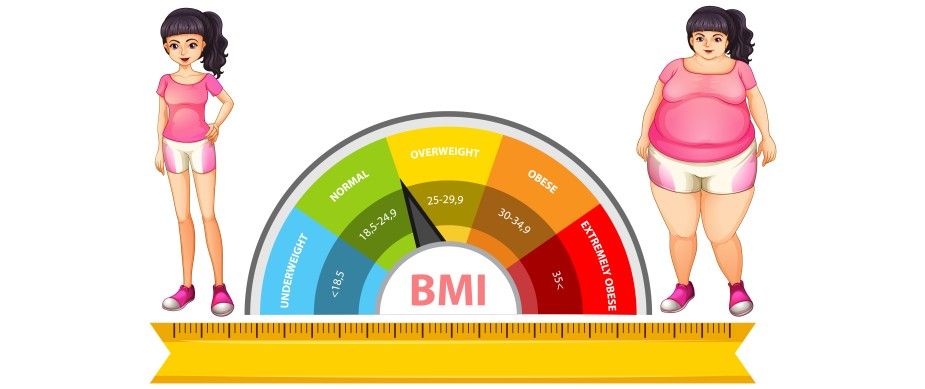
Adult BMI values are commonly divided into categories that help describe weight in relation to height. These categories are useful for screening and health discussions, but they are not precise measurements of body fat or individual health status. The standard classifications below generally apply to adults aged 20 and older.
| BMI Range | Standard Category | General Interpretation |
|---|---|---|
| Below 18.5 | Underweight | Weight may be lower than the standard range |
| 18.5–24.9 | Healthy weight | Within the standard reference range |
| 25.0–29.9 | Overweight | Above the standard reference range |
| 30.0 and above | Obesity | Higher weight-related health risks may be present |
These categories help organize BMI results into a consistent framework. However, a result within the healthy-weight range does not guarantee that every aspect of a person’s health is satisfactory. Similarly, a higher result does not automatically mean that someone has a particular disease. Medical professionals may consider blood pressure, blood glucose, cholesterol levels, waist circumference, medical history, and other factors before evaluating overall health.
It is also important to recognize that BMI thresholds can require different interpretation in certain populations. Some ethnic groups may experience metabolic risks at lower BMI values than those suggested by general international classifications. Local clinical guidance and individual risk factors can therefore be important when interpreting results.
Who Should Use a BMI Calculator?
Adults who want a general understanding of their weight in relation to height may find this tool helpful. It can be useful when beginning a fitness routine, preparing for a healthcare appointment, or monitoring broad changes in body weight over time. People who have recently changed their eating habits or physical activity levels may also use it as one way to observe long-term trends.
For example, someone who works at a desk throughout the day might use their result as a starting point for reviewing daily movement, meal timing, and sleep habits. Another person preparing for a recreational sporting event may want to understand their weight category before discussing performance and nutrition goals with a qualified professional.
However, not everyone should interpret BMI using the standard adult categories. Children and teenagers require age- and sex-specific BMI percentiles because their bodies are still growing. Pregnant individuals also need a different approach to weight assessment. For older adults, muscle loss and changes in body composition can affect how useful BMI is as a standalone measure.
Limitations of BMI You Should Understand
Although BMI is convenient, it cannot distinguish between fat, muscle, bone, and other components of body weight. This limitation matters particularly for athletes, bodybuilders, and people with relatively high muscle mass. Someone with substantial muscle development may have a BMI in the overweight category without having the same body fat level or health profile as another person with the same BMI.
Body fat distribution is another important consideration. Fat stored around the abdomen may be more strongly associated with certain metabolic health risks than fat stored in other areas. BMI does not show where fat is located, which means two people with identical results may have different risk profiles. Waist circumference and other clinical measurements can provide additional information when appropriate.
A bmi calculator also cannot identify nutritional deficiencies, cardiovascular disease, diabetes, or other medical conditions. It does not measure fitness, endurance, flexibility, mental well-being, or dietary quality. For these reasons, its result should be understood as one piece of information rather than a complete picture of physical health.
Why Body Composition Matters
Body composition describes the relative amounts of fat, muscle, bone, and other tissues in the body. It can influence how a person’s BMI should be interpreted, particularly when muscle mass is unusually high or low. For instance, an individual who performs regular resistance training may gain muscle while maintaining a relatively stable body weight. Their BMI might change very little even though their strength and physical composition improve.
Likewise, older adults may experience muscle loss that is not immediately obvious from their BMI result. This is one reason healthcare professionals may consider strength, mobility, nutritional status, and other measurements when evaluating health. The most useful assessment depends on the person’s age, circumstances, and health goals.
How to Use BMI Results to Improve Your Lifestyle
A BMI result can provide an opportunity to review daily habits without turning weight into the only measure of success. If your result falls outside the standard range, begin by considering your usual meals, activity level, sleep schedule, stress, and any relevant medical history. Small, sustainable changes are generally more practical than strict routines that are difficult to maintain.
For people who want to improve their health, useful starting points include:
- Eat balanced meals that include vegetables, fruits, protein sources, whole grains, and appropriate portions.
- Build regular movement into your day through walking, cycling, household activities, or other enjoyable exercise.
- Maintain a consistent sleep schedule and make time for recovery.
- Discuss persistent or unexplained weight changes with a qualified healthcare professional.
These habits can support general well-being regardless of whether your BMI changes quickly. Improvements in energy, strength, mobility, sleep quality, and endurance are also meaningful indicators of progress. Weight management should focus on sustainable health improvements rather than rapid changes or unrealistic appearance goals.
If your BMI suggests that your weight may be below the standard range, avoid assuming that eating more without guidance is always the best solution. Low body weight can sometimes be associated with inadequate nutrition, digestive problems, medication effects, or other health issues. Similarly, a higher BMI may warrant a broader assessment rather than an immediate restrictive diet. A healthcare professional or registered dietitian can help identify an appropriate approach.
BMI Calculator for Different Age Groups
BMI interpretation changes according to age and stage of development. For adults aged 20 and above, the standard categories provide a general screening framework. For children and adolescents, however, the same numerical value can mean different things depending on age and sex. Their BMI is generally interpreted using growth charts and percentiles rather than adult thresholds.

This distinction is important because children experience changes in height, weight, and body composition as they grow. A result that appears high or low under adult classifications cannot reliably establish whether a child is at a healthy weight. Parents and caregivers should consult a pediatric healthcare professional when they have concerns about a child’s growth or nutritional needs.
Older adults may also benefit from a more comprehensive interpretation. Changes in muscle mass, bone density, appetite, and mobility can affect health even when body weight remains relatively stable. In these circumstances, an assessment of strength, nutrition, physical function, and medical history may be more informative than BMI alone.
Common Mistakes to Avoid When Checking BMI
One frequent mistake is entering the wrong units. A person may accidentally enter centimeters instead of meters or pounds instead of kilograms, producing a misleading result. Always verify the measurement settings before calculating BMI. Using a consistent weighing routine can also help when comparing results over several weeks or months.
Another common mistake is treating a single number as a definitive health diagnosis. BMI categories are broad screening classifications, and individual circumstances can influence their meaning. Temporary weight changes related to hydration, illness, dietary patterns, or other factors may also affect measurements. Looking at longer-term patterns is often more useful than reacting to a single reading.
People sometimes compare their results directly with those of friends, relatives, or social media personalities. These comparisons can be misleading because individuals differ in height, age, muscle mass, body composition, and medical background. A more useful approach is to understand your own circumstances and discuss meaningful health goals with an appropriate professional.
Conclusion
A bmi calculator is a convenient tool for understanding how body weight relates to height. It provides a quick numerical result, helps explain standard adult weight categories, and can support initial conversations about weight management. When used correctly, it offers a practical starting point for becoming more aware of general health and lifestyle habits. However, BMI has important limitations because it cannot measure body composition, identify fat distribution, or diagnose medical conditions. Age, muscle mass, ethnicity, pregnancy, and individual health history can all influence how the result should be interpreted. Combining BMI with other relevant measurements and professional advice provides a more balanced understanding of health.