
Title: Meta Title: Meta Description: Introduction
A calculator is one of the most useful digital tools for handling mathematical tasks quickly and accurately. What once required handwritten calculations and careful checking can now be completed within seconds. From simple addition and subtraction to percentages, financial estimates, scientific equations, and practical planning, calculators have become part of everyday life. Students use them for learning and checking mathematical work, professionals rely on them for business calculations, and ordinary users turn to them when they need a quick answer without working through a lengthy equation manually.
The modern calculator is much more than a basic device with numbers and arithmetic symbols. Digital calculators can support percentages, square roots, powers, memory functions, scientific operations, unit conversions, and other specialized calculations. Many are available directly through computers, smartphones, browsers, and other digital devices, making mathematical assistance accessible almost anywhere. Their convenience has also made them useful for people who may not regularly perform complex mathematical calculations.
Understanding how to use a calculator effectively is important because accurate input matters just as much as the tool itself. A calculator can produce an immediate result, but users still need to understand what they are calculating, which numbers belong in the equation, and whether the final result makes practical sense. Learning this balance helps people use calculators as helpful problem-solving tools rather than simply relying on them without understanding the underlying calculation.
What Is a Calculator and How Does It Work?
At its simplest, a calculator is a device or software application designed to perform mathematical operations. Basic models generally handle addition, subtraction, multiplication, and division, while advanced versions can perform functions involving percentages, logarithms, trigonometry, exponents, statistics, and algebraic expressions. The underlying purpose remains the same: take numerical inputs, apply mathematical rules, and return a result.
Digital calculators process inputs according to programmed mathematical instructions. When a user enters an expression such as 250 × 0.15, the system interprets the numbers and operation before displaying the result. More advanced calculators can recognize mathematical functions and follow the appropriate order of operations. This makes them particularly useful when an equation contains multiple operations that could otherwise be difficult to calculate manually.
The development of calculator technology has also changed how people interact with mathematics. Physical calculators remain useful, but software-based versions have become increasingly common because they are convenient and often include additional functions. A smartphone, computer, or web-based tool can provide calculations without requiring a separate physical device.
Why Calculators Are Important in Everyday Life
Many everyday decisions involve numbers, even when people do not think of them as mathematical problems. Shopping totals, discounts, household budgets, travel expenses, cooking measurements, savings goals, and time calculations can all require arithmetic. A calculator reduces the time required to perform these tasks and makes it easier to verify an answer before making a decision.
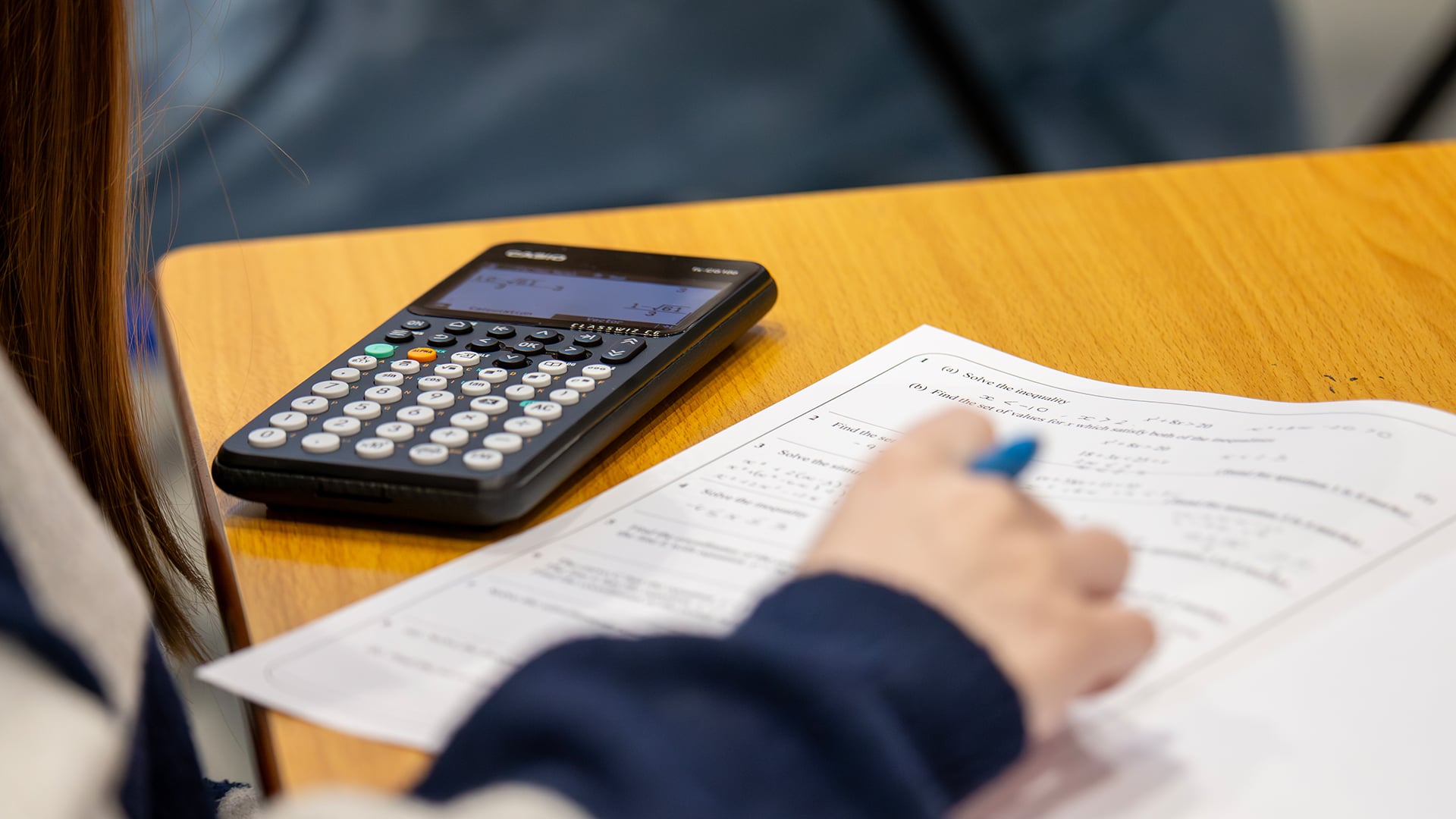
For example, imagine a product priced at ₹2,400 with a 15% discount. Instead of manually calculating the discount and subtracting it from the original price, a user can quickly determine that the discount is ₹360 and the final price is ₹2,040. Similar calculations can be useful when comparing prices, estimating monthly expenses, or planning purchases.
Calculators can also reduce mistakes caused by mental arithmetic. People can easily make errors when working with several numbers, particularly when decimals or percentages are involved. Using a reliable tool provides a quick way to check the calculation. However, users should still review the figures they enter because an incorrect input can produce an incorrect result even when the mathematical operation itself is performed perfectly.
Common Types of Calculators
Different situations require different mathematical functions. A basic calculator may be sufficient for simple arithmetic, while specialized tools can support more complicated calculations. The right choice depends on the type of problem, the required level of precision, and the user’s familiarity with mathematical operations.
| Calculator Type | Common Uses | Typical Users |
|---|---|---|
| Basic | Addition, subtraction, multiplication, division | General users |
| Scientific | Advanced mathematical and scientific functions | Students, engineers |
| Financial | Interest, loans, investments, financial estimates | Professionals, households |
| Graphing | Equations, functions, graphs, advanced mathematics | Students, educators |
| Percentage | Discounts, increases, decreases, ratios | General users, businesses |
A basic calculator is ideal for quick daily arithmetic. Scientific models are more appropriate when working with advanced mathematics or science-related equations. Financial calculators focus on calculations such as interest and loan payments, while graphing models can display mathematical relationships visually. Online and mobile calculators may combine several of these capabilities in a single interface.
Using a Calculator for Education
Education is one of the most important areas in which calculators are used. Students encounter calculations throughout arithmetic, algebra, geometry, statistics, physics, chemistry, economics, and other subjects. A calculator can help students verify answers, explore mathematical relationships, and spend more time understanding concepts rather than repeatedly performing routine arithmetic.
However, calculators are most useful when they support learning rather than replace it. A student who understands why an equation works can use a calculator to confirm the numerical result. For instance, when learning percentages, students should understand how a percentage is converted into a decimal before using a tool to calculate a particular value. This approach develops both mathematical reasoning and practical technology skills.
Teachers may also use calculators to demonstrate real-world examples. Instead of spending an entire lesson performing repetitive calculations, classroom activities can focus on interpreting results. Students might calculate growth rates, compare statistical values, examine geometric measurements, or explore how changing one variable affects another.
Calculator Use in Advanced Mathematics
Scientific and graphing calculators become increasingly valuable as mathematical problems become more complicated. Trigonometric functions, logarithms, exponential expressions, powers, and statistical operations can involve calculations that are time-consuming to perform manually. A suitable calculator allows students and professionals to focus on the reasoning behind the problem.
Even with advanced functions, understanding the order of operations remains important. Users should know how parentheses, exponents, multiplication, division, addition, and subtraction interact. Entering a complex expression without understanding its structure can lead to confusion, especially when the calculator produces a technically correct result for an incorrectly entered equation.
Calculators for Personal Finance and Budgeting
Personal finance involves frequent numerical decisions, making calculators particularly useful for households and individuals. People can estimate monthly expenses, calculate savings targets, compare payment amounts, and examine the effect of percentages on income or spending. These calculations can make financial planning more structured and easier to understand.
Suppose someone wants to save ₹60,000 over twelve months. Dividing the target by twelve gives a simple monthly savings goal of ₹5,000. If the person already saves ₹3,500 per month, another calculation can show that an additional ₹1,500 per month would be needed to reach the target. These simple calculations can turn a broad financial objective into a measurable plan.
Financial calculations can become more complicated when interest, investment returns, taxes, inflation, or loan payments are involved. In these situations, specialized financial tools can provide useful estimates, but the result should not automatically be treated as a guaranteed outcome. Interest rates, fees, changing market conditions, and individual financial circumstances can affect actual figures.
Calculators for Shopping and Discounts
Shopping is another situation where a calculator can provide immediate practical value. Discounts are often displayed as percentages, and calculating the final price mentally can be inconvenient when several products are involved. A quick calculation helps consumers understand how much they will actually pay.
For example, a 20% discount on an item priced at ₹1,500 represents ₹300, leaving a discounted price of ₹1,200. If an additional tax or service charge applies, the final amount can then be calculated separately. This process is particularly useful when comparing products from different sellers or evaluating whether a promotional offer provides a meaningful saving.
Percentage calculations are also useful for price increases. If a monthly service costs ₹800 and the price increases by 10%, the increase is ₹80, making the new price ₹880. Understanding these changes helps people evaluate recurring expenses instead of looking only at the original advertised amount.
Calculators in Business and Professional Work
Businesses regularly handle numerical information involving sales, expenses, revenue, taxes, inventory, pricing, wages, and performance measurements. A calculator can provide quick results during meetings, planning sessions, sales discussions, and routine administrative work.

For small businesses, simple calculations may include determining profit margins or adjusting prices. If a product costs ₹700 to purchase and is sold for ₹1,000, the difference is ₹300 before considering other business expenses. A more complete analysis may account for transportation, marketing, employee costs, taxes, and overheads before determining actual profitability.
Professionals working with larger datasets generally use spreadsheets, databases, accounting software, or specialized analytical platforms. Nevertheless, calculators remain useful for quick verification. A professional may use a simple calculation to check whether a spreadsheet result appears reasonable before relying on it in a report or decision.
How to Get More Accurate Results
Using a calculator correctly requires more than pressing buttons quickly. Users should first identify the exact question, gather the correct figures, and determine which mathematical operation is appropriate. Breaking a complicated problem into smaller stages can make the process easier to verify.
A few practical habits can improve accuracy:
- Check every number before entering it.
- Use parentheses when an expression contains multiple operations.
- Keep track of decimal places and units.
- Recalculate important results using a second method.
It is also useful to estimate the expected answer before calculating. If someone expects a result around 500 but receives 50,000, that difference should encourage them to check the equation and input values. This simple habit can catch errors that might otherwise go unnoticed.
The Role of Calculators in the Digital Age
Modern digital technology has made calculators more accessible than ever. They can be found on smartphones, computers, smart devices, educational platforms, and dedicated applications. Some tools combine calculation functions with unit conversion, financial estimation, date calculations, or other practical features.
Artificial intelligence and modern software have also expanded how users interact with mathematical problems. Instead of entering only individual numbers, some tools can interpret natural-language questions and explain calculations step by step. Even so, users should understand the distinction between obtaining a numerical answer and understanding why that answer is correct.
The continuing usefulness of calculators demonstrates that automation does not eliminate the need for mathematical knowledge. Instead, it changes how people apply that knowledge. When users understand the underlying concepts, digital tools become more powerful because they can check results, explore scenarios, and accelerate routine work.
When You Should Not Rely Completely on a Calculator
Although calculators are extremely convenient, they should not replace basic mathematical understanding. A person who cannot recognize whether an answer is reasonable may accept an incorrect result simply because a device displayed it. This is especially important in education, business, finance, engineering, and other areas where numerical mistakes can have meaningful consequences.
Users should also pay attention to units. Calculating 10 × 5 may produce 50, but the meaning of that number depends on whether the figures represent rupees, kilograms, meters, minutes, or another measurement. Correct arithmetic does not automatically mean correct interpretation.
For important calculations, it is good practice to review the original assumptions and, when appropriate, verify the result through another method. A calculator should support sound reasoning, not replace it.
Conclusion
A calculator remains an essential tool because it makes numerical work faster, more convenient, and easier to verify. Its usefulness extends from simple household arithmetic to education, budgeting, business analysis, scientific work, and advanced mathematics. Modern digital versions have made these capabilities widely accessible, allowing users to perform calculations whenever they need them. The greatest value of a calculator comes from combining its speed with human understanding. Users who know what they are calculating, choose the appropriate operation, enter accurate information, and review the result can use calculators confidently in a wide range of situations. Whether calculating a shopping discount, planning savings, checking homework, or analyzing professional figures, the tool can simplify complex numerical tasks while leaving the important reasoning in the hands of the user.

.avif&description=Discover how a calculator simplifies everyday math, budgeting, finance, education, conversions, and planning while improving speed, accuracy, and decision-making.)