
Leadership plays a defining role in how organizations respond to changing markets, manage uncertainty, and build long-term success. In industries such as energy and healthcare, executives must balance financial performance with operational efficiency, stakeholder expectations, and evolving business conditions. The professional backgrounds of David Lawler and Bruce Broussard offer an opportunity to examine these challenges from two different industry perspectives. Their careers reflect the importance of strategic thinking, organizational discipline, and the ability to make decisions in environments where the consequences can extend well beyond a company’s immediate financial results.
When exploring David Lawler and Bruce Broussard, it is important to distinguish their individual professional identities rather than assume they have a direct business partnership or a shared leadership history. David Lawler is associated with the energy sector, particularly oil and gas operations, while Bruce Broussard is known for his leadership in healthcare, including health insurance and healthcare services. Although their industries differ considerably, both fields require executives to understand complex systems, allocate resources carefully, and respond to regulatory and economic pressures. Examining their careers through this broader perspective provides useful insights into how leadership principles can apply across different business environments.
The following article explores their professional backgrounds, the challenges associated with their respective industries, and the leadership lessons that can be drawn from their experiences. It also considers how changing market conditions, technology, accountability, and long-term planning influence executive decision-making in the modern business landscape.
David Lawler: A Career in Energy Leadership
Professional Background and Industry Experience
David C. Lawler has built his career around the oil and gas industry, developing experience in engineering, production, business operations, and executive management. His early professional work included engineering roles at Conoco and Burlington Resources, followed by approximately a decade at Shell, where he gained experience in technical and leadership assignments. These roles provided a foundation for understanding how energy companies manage complex assets, production targets, operational risks, and capital investments. His progression from technical positions to senior executive responsibilities illustrates how industry knowledge can support broader strategic decision-making. David Lawler is a graduate of the Colorado School of Mines, where he studied petroleum engineering, and later earned an MBA from Tulane University.
Lawler subsequently held leadership positions at PostRock Energy and SandRidge Energy before joining BP’s US onshore energy business in 2014. He became CEO of bpx energy and later served as chairman and president of BP America from 2020 to 2023. One significant milestone during his tenure at bpx energy was the acquisition of BHP’s onshore US assets in 2018, a transaction valued at approximately $10.5 billion. This expansion increased the scale of the business and created an opportunity to improve production, operating efficiency, and capital utilization. In his subsequent career, Lawler moved into leadership at Kimmeridge Texas Gas and Commonwealth LNG, and he is now identified as CEO of Caturus, an integrated gas and liquefied natural gas company. His experience demonstrates the importance of combining technical understanding with financial discipline and operational execution.
Leadership Challenges in the Energy Sector
The energy industry presents executives with challenges that can change significantly within a short period. Oil and gas prices fluctuate according to supply, demand, geopolitical developments, production decisions, and economic growth. At the same time, companies must maintain safe operations, manage environmental responsibilities, satisfy investors, and plan for evolving energy consumption patterns. Leaders must make decisions that remain financially sensible under different market conditions. For example, expanding production may appear attractive when commodity prices are high, but an investment can become less profitable if prices fall or development costs rise unexpectedly.
Lawler’s career provides a useful illustration of the relationship between asset management and business strategy. Large acquisitions are not successful simply because they increase a company’s size. Executives must integrate operations, evaluate reserves, control costs, maintain safety standards, and ensure that the acquired assets contribute to sustainable financial performance. Energy businesses also face increasing pressure to measure emissions and consider lower-carbon technologies alongside conventional production. These competing priorities require leaders to evaluate both immediate commercial opportunities and longer-term changes in the energy market.
Bruce Broussard: Leadership Beyond Healthcare
Professional Background and Executive Experience
Bruce Broussard developed his career in healthcare management, finance, and business transformation. Before becoming widely recognized for his leadership at Humana, he held senior positions at US Oncology, including financial and executive leadership roles. He later served as CEO of McKesson’s specialty pharmacy division following the acquisition of US Oncology. These experiences exposed him to the financial, operational, and patient-service dimensions of healthcare, an industry where business performance must be considered alongside access to treatment, quality of care, and regulatory requirements.
Broussard became president of Humana in 2011 and served as its CEO from 2013 through 2024. During this period, Humana pursued a broader approach to healthcare that placed greater emphasis on coordinated services, senior care, and value-based care models. Rather than focusing exclusively on traditional health insurance, the company expanded its attention to services intended to support patients across different stages of their healthcare journeys. This strategic direction reflected an important industry shift: healthcare organizations increasingly seek ways to coordinate insurance coverage, clinical services, preventive care, and support for people managing complex health needs. Broussard’s work at Humana made him a prominent executive in discussions about healthcare transformation and operational strategy.
His career continued to develop after his departure from Humana’s chief executive role. As of 2026, Broussard is serving as interim CEO of HP Inc., following the company’s February leadership transition. His appointment demonstrates how executive experience in one sector can become relevant to another, particularly when a business needs leadership in financial management, operational execution, organizational priorities, and strategic continuity. He has also maintained involvement in corporate boards and advisory activities, bringing experience in healthcare, finance, and governance to organizations beyond his former executive roles.
Healthcare Transformation and Business Strategy
Healthcare transformation involves more than adopting new technology or expanding services. Organizations must coordinate different providers, manage costs, maintain regulatory compliance, and demonstrate that their services improve outcomes for patients. These goals can be difficult to achieve because healthcare systems involve numerous participants, including insurers, doctors, hospitals, pharmacies, patients, and government agencies. Decisions that reduce costs in one area may create additional burdens elsewhere, so leaders need a broad understanding of how the entire system operates.
Broussard’s experience at Humana highlights the strategic importance of connecting financial decisions with patient needs. Value-based care, for example, seeks to reward healthcare providers for the quality and effectiveness of care rather than relying solely on the volume of services delivered. In principle, this approach can encourage preventive care, better coordination, and more thoughtful use of healthcare resources. However, it requires reliable data, appropriate incentives, strong provider relationships, and careful measurement of outcomes. The broader lesson is that meaningful transformation depends on aligning the organization’s financial model with the results it aims to achieve.
David Lawler and Bruce Broussard: Comparing Leadership Approaches
Although their professional backgrounds differ, David Lawler and Bruce Broussard offer useful examples of how senior executives approach complex organizational responsibilities. Lawler’s experience is rooted in energy production, large-scale asset management, and capital-intensive projects. Broussard’s background emphasizes healthcare services, financial management, and business transformation. Their careers illustrate how effective leadership depends partly on understanding the unique demands of an industry rather than relying on a single management formula.
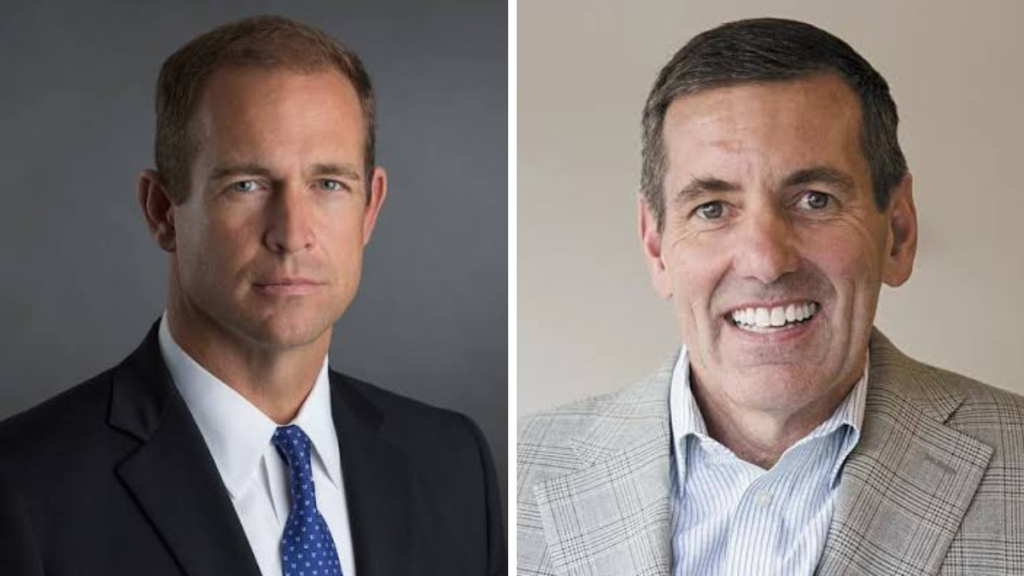
A comparison of their professional experiences also shows that leadership priorities change according to the nature of the business. Energy companies must consider production efficiency, commodity prices, infrastructure, and environmental risks. Healthcare organizations must navigate patient outcomes, insurance costs, service accessibility, and regulatory oversight. In technology, where Broussard now leads HP on an interim basis, executive priorities include operational performance, innovation, customer demand, and competition. The industries differ, but each requires disciplined execution, clear accountability, and the ability to adapt when market conditions change.
| Leadership dimension | David Lawler | Bruce Broussard |
|---|---|---|
| Primary industry experience | Oil, gas, and LNG | Healthcare, insurance, and technology leadership |
| Core professional strengths | Engineering, energy operations, asset management | Finance, business transformation, organizational leadership |
| Major leadership experience | BP America and bpx energy | Humana and US Oncology |
| Strategic emphasis | Production, capital efficiency, operational performance | Integrated services, business performance, customer outcomes |
| Current executive role | CEO of Caturus | Interim CEO of HP Inc. |
This comparison should not be interpreted as a direct ranking of either executive. Their responsibilities have involved different operating environments, stakeholders, and measures of success. Instead, it helps explain why leadership must be evaluated in context. A strategy that works well for a large energy producer may not be suitable for a healthcare organization or a global technology company. Strong executives understand these distinctions and adapt their approach to the business they lead.
Important Leadership Lessons From Their Careers
1. Strategic Thinking Must Be Supported by Execution
A business strategy is valuable only when an organization can translate it into measurable results. Energy companies may announce major acquisitions or production targets, but success depends on integrating assets, controlling expenses, and maintaining safe operations. Healthcare businesses may pursue better patient outcomes, but they must also redesign processes, coordinate services, and measure whether improvements are occurring. The careers of Lawler and Broussard illustrate the importance of connecting high-level objectives with practical operating decisions.
2. Financial Discipline Creates Room for Sustainable Growth
Capital allocation is a central responsibility for executives. Every major investment competes with alternative uses of money, including technology, workforce development, infrastructure, and debt management. Leaders need to consider expected returns, uncertainty, and the possibility that market conditions may change. For example, an energy company evaluating a new production project must consider future prices and operating costs, while a healthcare company investing in digital systems must assess whether those systems improve efficiency, service quality, or patient outcomes.
3. Adaptability Helps Organizations Navigate Change
Business environments rarely remain stable for long. New technologies, regulations, consumer expectations, and economic pressures can quickly change established strategies. Executives must recognize when existing approaches need adjustment without creating unnecessary disruption. The transition from healthcare leadership to an interim role at a technology company also demonstrates that executive experience can be applied across industries, provided the leader takes time to understand the new organization’s products, customers, competitive pressures, and workforce.
4. Accountability Builds Organizational Confidence
Employees, investors, customers, and business partners need clear information about priorities and performance. Effective leadership requires transparent communication, realistic targets, and responsibility for results. In highly regulated sectors such as energy and healthcare, accountability is especially important because poor decisions can affect public trust, operational safety, financial stability, or the quality of services delivered. Leaders who establish clear responsibilities and encourage informed decision-making are better positioned to build resilient organizations.
The Role of Innovation in Modern Executive Leadership
Innovation has become an essential part of corporate strategy, but its value depends on how effectively it addresses real business challenges. In the energy sector, innovation can involve improving production methods, monitoring equipment performance, reducing emissions, and using data to make operations more efficient. In healthcare, it can include digital patient services, predictive analytics, care coordination, and technologies that help providers make better-informed decisions. In technology companies, innovation also influences product development, customer experience, and the ability to remain competitive in rapidly changing markets.
The careers associated with David Lawler and Bruce Broussard illustrate two different contexts in which innovation matters. Energy executives must evaluate new methods against operational reliability, safety, and investment requirements. Healthcare leaders must consider whether new approaches improve access, efficiency, and patient outcomes while protecting sensitive information. Neither industry can rely on innovation as a substitute for sound management. Successful implementation requires capable teams, appropriate investment, reliable performance measures, and a willingness to revise strategies when evidence shows that an approach is not working.
What Their Careers Mean for Future Business Leaders
For aspiring executives, the professional journeys of David Lawler and Bruce Broussard demonstrate the value of developing expertise while remaining open to broader responsibilities. Technical knowledge can provide a strong foundation for leadership in complex industries, while experience in finance, organizational management, and strategic planning can help executives oversee increasingly large operations. Career advancement also requires the ability to communicate clearly, evaluate competing priorities, and build teams capable of delivering results.
Future business leaders can apply several practical principles from these careers: understand the industry before making major decisions, evaluate investments carefully, measure outcomes rather than relying on announcements, and remain prepared to adjust when circumstances change. These principles apply to small businesses as well as multinational corporations. A startup founder, for instance, must balance growth ambitions with available cash, customer expectations, and operational capacity. Similarly, an established company must protect its core business while identifying opportunities for improvement.
Conclusion
The professional experiences of David Lawler and Bruce Broussard demonstrate that effective leadership takes different forms depending on an organization’s purpose, industry, and operating environment. Lawler’s experience in energy emphasizes engineering knowledge, operational efficiency, asset management, and investment decisions. Broussard’s career highlights financial discipline, healthcare transformation, coordinated services, and the ability to guide organizations through strategic change. His appointment as interim CEO of HP in 2026 further illustrates how executive capabilities can extend beyond the sector in which a leader initially built a reputation.
Ultimately, david lawler and bruce broussard represent distinct professional paths that offer complementary lessons about modern business leadership. Their careers show why successful organizations need more than ambitious plans: they need informed decisions, accountable teams, effective execution, and the flexibility to respond to changing conditions. For readers interested in corporate strategy and executive development, their experiences provide a useful framework for understanding how leadership decisions influence business performance and long-term organizational resilience.