
Introduction
Managing academic scores can sometimes become confusing, especially when students have multiple subjects, assignments, exams, and different grading systems. A grade calculator is a useful tool that helps students, teachers, and parents quickly understand academic performance by converting marks into grades, percentages, or overall scores. Instead of manually calculating every subject score, students can use this method to save time and reduce calculation errors.
A clear understanding of grades allows students to identify their strengths and areas where improvement is needed. Whether someone is preparing for school exams, college assessments, or professional courses, knowing the final grade helps in better planning. A grade calculator makes the entire process simple by providing accurate results based on entered marks, weightage, and grading rules.
What Is a Grade Calculator?
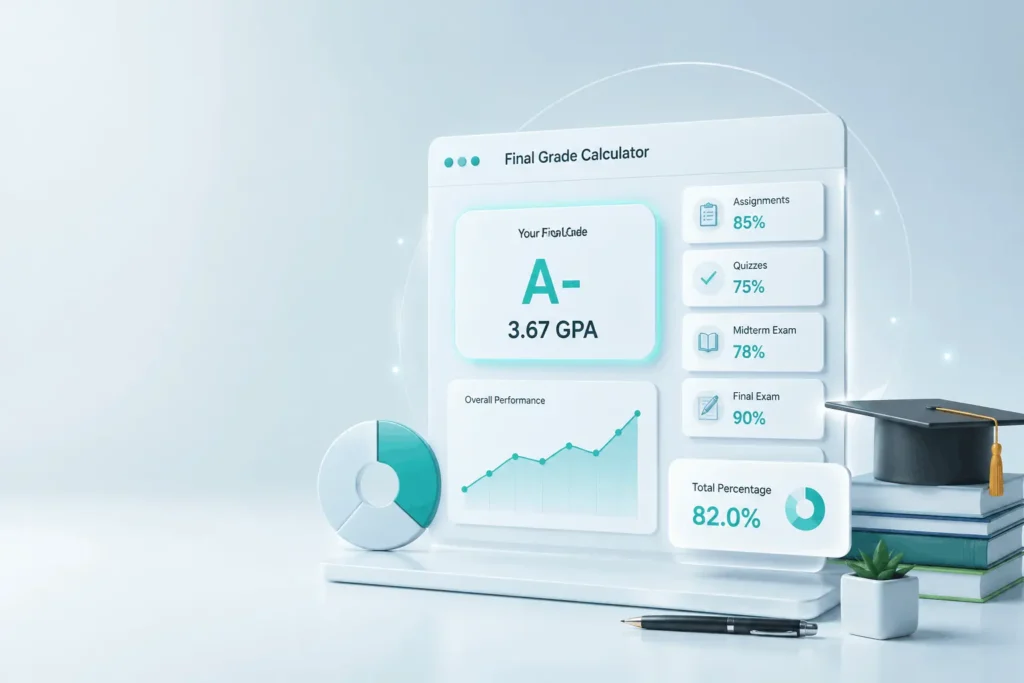
A grade calculator is a digital or manual calculation method used to determine a student’s final grade based on marks obtained in different assessments. It considers factors such as test scores, assignments, projects, attendance marks, and final examinations to calculate the overall result.
Different educational institutions follow different grading systems. Some use percentage-based evaluation, while others use letter grades such as A, B, C, or GPA systems. A grade calculator helps users understand these systems by converting raw scores into meaningful academic results.
Students often use this tool before final examinations to estimate the score they need to achieve a desired grade. Teachers can also use it to maintain accurate records and evaluate student progress efficiently.
How Does a Grade Calculator Work?
The working process of a grade calculator is simple. Users generally enter their obtained marks, total marks, and the importance or weightage of each assessment. The calculator then processes the information and provides the final result.
For example, if a subject includes 40% marks from assignments and 60% marks from exams, the calculator combines both values according to their importance. This weighted calculation gives a more accurate representation of overall performance.
The basic steps include:
- Enter marks received in each subject or assessment.
- Add the total possible marks.
- Select the grading system being used.
- Apply weightage if required.
- Calculate the final grade or percentage.
This simple process helps students avoid complicated mathematical calculations and understand their academic position quickly.
Common Types of Grading Systems
Educational organizations use different grading methods depending on their requirements. Understanding these systems helps students interpret their results correctly.
| Grading System | Description | Common Usage |
|---|---|---|
| Percentage System | Shows marks out of 100 | Schools and universities |
| Letter Grade System | Uses grades like A, B, C, and D | Academic institutions |
| GPA System | Represents performance through grade points | Colleges and universities |
| Weighted Grade System | Considers different importance of assessments | Advanced courses |
A grade calculator can support all these systems by applying the correct formulas and providing accurate results.
Benefits of Using a Grade Calculator
A grade calculator offers several advantages for students and educators. It simplifies academic tracking and helps users make informed decisions about their studies.
Some important benefits include:
- Quick Results: Students can calculate their grades within seconds.
- Improved Accuracy: It reduces mistakes caused by manual calculations.
- Better Planning: Students can understand how many marks they need for improvement.
- Performance Tracking: Regular calculations help monitor academic progress.
- Time Saving: Teachers and students can avoid repetitive calculations.
By using this tool regularly, students can create better study strategies and focus on subjects that require additional attention.
Importance of Grade Calculation for Students
Grades play an important role in academic and career development. They help students understand their learning progress and prepare for future opportunities. A grade calculator allows students to analyze their performance before receiving final results.
Many students only focus on final exams, but continuous assessment also contributes significantly to overall grades. Assignments, quizzes, practical work, and class participation may affect the final outcome. Calculating these components properly helps students understand the impact of every activity.
With accurate grade information, students can set realistic goals and improve their preparation methods. It also reduces stress because learners have a clear idea about their current position and future requirements.
How Teachers Can Use Grade Calculators
Teachers handle multiple students and subjects, making accurate score management important. A grade calculator helps educators organize assessment results efficiently and maintain consistency.
 Teachers can use these calculations to:
- Prepare student progress reports.
- Analyze class performance.
- Identify students who need additional support.
- Maintain accurate grading records.
- Save time during evaluation processes.
By reducing manual calculations, teachers can focus more on teaching and providing guidance to students.
Grade Calculator for Different Academic Levels
The usefulness of a grade calculator is not limited to a particular education level. Students from different stages can benefit from accurate score evaluation.
| Education Level | How It Helps |
| School Students | Understand subject performance and final grades |
| College Students | Calculate GPA and semester results |
| Online Learners | Track course progress |
| Professional Students | Monitor certification preparation |
From basic school education to advanced academic programs, calculating grades properly helps learners stay organized.
Factors That Affect Final Grades
Several factors influence the final academic result. Understanding these factors helps students improve their performance effectively.
Important factors include:
- Examination scores.
- Assignment marks.
- Project evaluation.
- Practical assessments.
- Attendance and participation.
- Course weightage.
A grade calculator considers these elements and provides a complete picture of academic achievement.
Tips to Improve Your Grades
While calculating grades is useful, students should also focus on improving their learning habits. Better preparation and consistent effort can lead to stronger academic results.
Helpful tips include:
- Create a regular study schedule.
- Review lessons frequently.
- Practice previous exam questions.
- Focus on weaker subjects.
- Ask teachers for feedback.
- Avoid last-minute preparation.
Using a grade calculator along with effective study techniques can help students achieve their academic goals.
Difference Between Percentage and Grade Calculation
Percentage and grade calculation are closely related but represent performance differently. Percentage shows the exact marks obtained, while grades provide a simplified evaluation based on performance levels.
For example, a student may receive 85%, which could represent an A grade depending on the institution’s grading rules. The conversion method differs between schools and universities.
A grade calculator helps students understand these differences and convert scores according to specific grading standards.
Why Accurate Grade Calculation Matters
Accurate academic calculations are important because even small mistakes can affect final results. Incorrect calculations may create confusion about eligibility, scholarships, admissions, or academic progress.
A reliable grade calculator ensures that all marks are included correctly and provides a realistic result. Students can use this information to prepare better and make decisions about their educational journey.
Future of Digital Grade Calculation
Technology has made academic management easier and more efficient. Modern calculation tools provide faster results and support different grading formats. Schools and universities are increasingly adopting digital solutions to manage student performance.
In the future, grade calculation systems may become more advanced by offering detailed performance analysis, progress reports, and personalized learning suggestions. These improvements can make academic evaluation more transparent and student-friendly.
Conclusion
A grade calculator is an essential tool for students, teachers, and educational institutions because it makes score evaluation simple, accurate, and efficient. It helps users understand academic performance, track progress, and plan future improvements.
By reducing manual calculations and providing quick results, this tool saves time and improves confidence among learners. Whether calculating percentages, letter grades, or GPA scores, a grade calculator provides valuable insights into academic achievement. Using it regularly along with effective study habits can help students stay organized and work toward better results.