
Understanding body weight is an important part of maintaining overall health, but weight alone does not always provide enough information. Height, body composition, age, lifestyle, physical activity, and other health factors can influence how a person’s weight relates to their well-being. This is where a bmi calculator can provide a quick starting point. By using height and weight, BMI gives a numerical estimate that can help classify weight status in adults.
Body Mass Index, commonly called BMI, is calculated by dividing weight in kilograms by height in meters squared. It is widely used because it is simple, inexpensive, and easy to track over time. However, BMI is considered a screening measure rather than a complete diagnosis of health. The Centers for Disease Control and Prevention explains that BMI should be considered alongside factors such as medical history, physical examination findings, health behaviors, and laboratory results.
For someone trying to understand their current weight, monitor a lifestyle change, or discuss health goals with a healthcare professional, knowing how BMI works can make the result more meaningful. The number itself is only one part of the picture, so it is important to understand both its usefulness and its limitations.
What Is BMI and Why Is It Used?
BMI is a mathematical measurement that relates a person’s weight to their height. For adults, the standard metric formula is weight in kilograms divided by height in meters squared. For example, if an adult weighs 70 kilograms and is 1.75 meters tall, the calculation is 70 divided by 1.75 squared, producing a BMI of approximately 22.9.
A bmi calculator performs this calculation automatically, which makes the process faster and reduces the need to work through the formula manually. The result can then be compared with established adult BMI categories. According to the CDC, BMI is useful as a screening measure because it can help identify whether a person’s weight falls within an underweight, healthy-weight, overweight, or obesity category.
BMI became widely used because it provides a standardized way to examine weight relative to height. It can be particularly useful when tracking changes over time. For example, a person may record their BMI periodically while making changes to their nutrition or physical activity. Looking at a longer-term trend can sometimes be more informative than focusing on a single measurement taken on one particular day.
How Does a BMI Calculator Work?
A bmi calculator generally requires two basic measurements: height and weight. Depending on the calculator, users may enter height in centimeters and weight in kilograms, or use feet, inches, and pounds. The calculator converts the information into the appropriate units and applies the BMI formula to generate the result.
For adults using metric measurements, the formula is BMI = weight in kilograms ÷ height in meters squared. Someone weighing 80 kilograms with a height of 1.80 meters, for instance, would have a BMI of approximately 24.7. Small differences in height or weight can change the final number, which is why entering accurate measurements is important.
A calculator can make the process convenient, but it cannot determine a person’s complete health status. The CDC notes that BMI does not directly measure body fat and does not distinguish between fat, muscle, and bone mass. This distinction matters because two people can have the same BMI while having very different body compositions.
Adult BMI Categories Explained
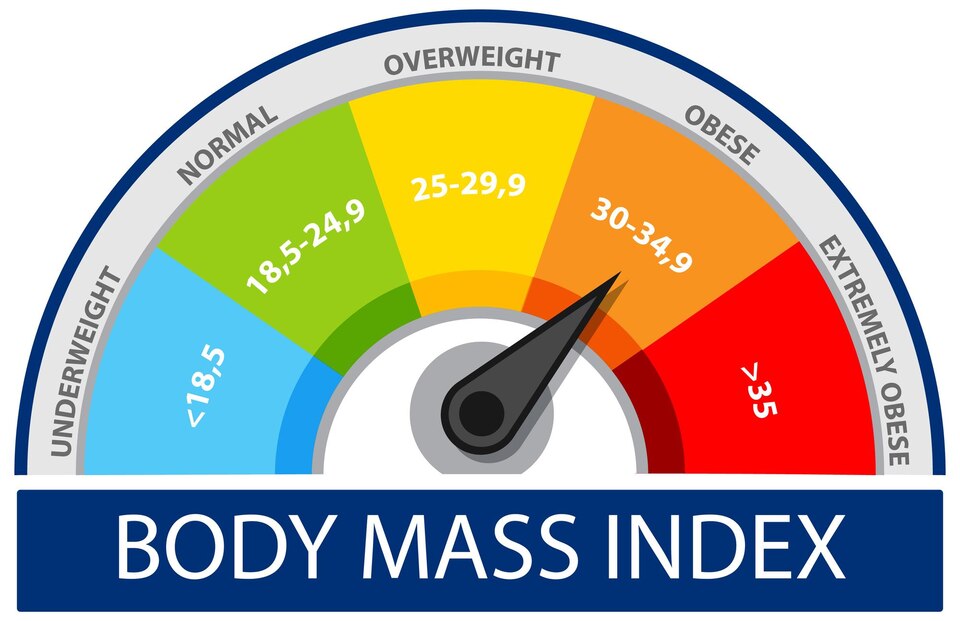
For adults aged 20 and older, commonly used BMI categories provide a general framework for interpreting the result. The standard CDC categories classify a BMI below 18.5 as underweight, 18.5 to less than 25 as healthy weight, 25 to less than 30 as overweight, and 30 or greater as obesity. Obesity is further divided into three classes.
| Adult BMI Range | General Category |
|---|---|
| Below 18.5 | Underweight |
| 18.5–24.9 | Healthy weight |
| 25.0–29.9 | Overweight |
| 30.0–34.9 | Obesity, Class 1 |
| 35.0–39.9 | Obesity, Class 2 |
| 40.0 or higher | Obesity, Class 3 |
These categories should be viewed as broad screening ranges rather than absolute statements about an individual’s health. A result near a category boundary, for example, should not automatically be treated as a major change in health status. Other measurements and personal circumstances can provide important context.
The World Health Organization similarly defines adult overweight as a BMI of 25 or higher and obesity as a BMI of 30 or higher. WHO also recognizes that BMI is a surrogate measure of body fatness and that additional measurements, such as waist circumference, can contribute to assessment.
How to Interpret Your BMI Result
Getting a BMI number is easy, but understanding what that number means requires some context. A bmi calculator can tell you where your measurement falls within a general category, but the result does not explain why your BMI is at that level. Factors such as muscle mass, diet, physical activity, sleep, genetics, medications, and existing health conditions may all be relevant.
For example, a physically active person with considerable muscle mass may have a relatively high BMI even though their body composition differs substantially from that of another person with the same BMI. This is one of the main reasons BMI should not be treated as a direct measurement of body fat.
Similarly, a BMI within the healthy-weight range does not automatically mean that every aspect of a person’s health is optimal. Blood pressure, cholesterol, blood glucose, fitness, nutrition, sleep, and mental well-being can all contribute to a broader assessment. BMI is therefore most useful when interpreted as one piece of information rather than a final conclusion.
Who Should Use a BMI Calculator?
For adults, a bmi calculator can be useful for people who want a quick way to understand their weight relative to height. It may also help individuals prepare for conversations with healthcare professionals, monitor general changes over time, or learn more about common weight classifications.
However, adult BMI categories should not simply be applied to children and teenagers. BMI is interpreted differently for people between ages 2 and 19 because growth and body composition change with age and differ by sex. For children and teenagers, BMI is generally assessed using age- and sex-specific BMI percentiles rather than the standard adult categories.
Pregnancy is another situation in which standard BMI interpretation requires caution because pregnancy-related changes in body weight do not fit the same framework used for non-pregnant adults. People with particular medical conditions or unusual body-composition characteristics may also need a more individualized assessment.
Benefits of Using BMI as a Screening Tool
One major benefit of a bmi calculator is convenience. Height and weight are relatively easy measurements to obtain, and the calculation can be completed within seconds. This makes BMI practical for routine screening and long-term tracking. Healthcare systems also use BMI because it offers a standardized measurement that can be collected consistently across large populations.
Another benefit is that BMI can help identify when a person’s weight may deserve further attention. A result outside the commonly defined healthy-weight range does not diagnose a disease, but it can encourage someone to look at other aspects of their health. The CDC states that BMI outside the healthy range can be associated with increased risk for certain health problems, while also emphasizing that BMI should be considered with additional health information.
For personal tracking, consistency is also valuable. Measuring height accurately and recording weight under similar conditions can make changes easier to observe. Rather than reacting to every small fluctuation, people can look at broader patterns and discuss meaningful changes with an appropriate healthcare professional when necessary.
Limitations of BMI
The limitations of BMI are important because the measurement does not directly identify how much body fat a person has or where that fat is located. It also cannot distinguish muscle from fat. This means BMI may not fully represent body composition in people with substantial muscle mass or other differences in body structure.
A bmi calculator also cannot evaluate blood pressure, blood sugar, cholesterol, cardiovascular fitness, diet quality, sleep, or other important health factors. Two people with identical BMI values may have significantly different health profiles. For this reason, using BMI alone to make major health decisions can provide an incomplete picture.
There is also an important difference between population-level use and individual interpretation. BMI categories are useful for studying patterns across large groups and for screening, but an individual assessment can require more information. Waist circumference, physical examination findings, medical history, laboratory tests, and lifestyle habits may all help provide additional context.
How to Get a More Accurate BMI Result
The quality of the BMI result depends partly on the accuracy of the measurements entered. Height should be measured without footwear when possible, while body weight should be recorded using a reliable scale. If using pounds and inches, users should make sure the calculator is configured for the correct measurement system rather than mixing metric and imperial units.
Small measurement errors can produce slightly different BMI values, particularly when a person is close to the boundary between categories. For long-term tracking, it can therefore be useful to measure under reasonably consistent conditions rather than comparing measurements taken under completely different circumstances.
It is also useful to focus on trends rather than becoming overly concerned with one isolated number. Body weight can naturally fluctuate because of hydration, food intake, exercise, and other temporary factors. A broader view of changes over time can provide more useful information than a single reading.
Using BMI Alongside Other Health Measurements
A bmi calculator becomes more useful when its result is considered alongside other indicators. Waist circumference, for example, can provide information about abdominal fat that BMI does not capture. Blood pressure, blood glucose, cholesterol, fitness level, diet, physical activity, and sleep can also contribute to a more complete understanding of health.
This broader approach is particularly relevant because health is influenced by many interacting factors. The CDC recommends considering BMI alongside medical history, health behaviors, physical examination findings, and laboratory findings when assessing an individual’s health.
Rather than asking whether a BMI number is simply “good” or “bad,” it can be more useful to ask what the number means in the context of the person’s overall health. That approach can help prevent unnecessary concern over a single measurement while still encouraging appropriate attention when a pattern suggests that further evaluation may be useful.
Common Mistakes When Using BMI
People sometimes make the mistake of treating BMI as a precise measurement of body fat. It is not. BMI is calculated from height and weight, so it cannot independently reveal body-fat distribution or distinguish between lean tissue and fat tissue.
Another common mistake is applying adult categories to children. Children and teenagers require age- and sex-specific interpretation because their bodies are still developing. Using the wrong reference system can lead to an inaccurate interpretation.
A few practical points can help avoid confusion:
- Enter height and weight using the correct units.
- Use accurate measurements rather than estimates.
- Interpret BMI according to the appropriate age group.
- Consider other health information instead of relying on BMI alone.
BMI and Long-Term Health Goals
A bmi calculator can be helpful when it is used as part of a broader, sustainable approach to health. Someone interested in improving their health may use BMI as one measurement while also focusing on balanced nutrition, regular physical activity, adequate sleep, and other healthy routines.
The goal should not necessarily be to chase a particular number as quickly as possible. Healthy changes are generally more meaningful when they can be maintained over time. A person’s starting point, health history, lifestyle, and individual circumstances can all affect what approach is appropriate.
If a BMI result raises concerns, especially when combined with other symptoms or health measurements, discussing it with a qualified healthcare professional can provide more personalized guidance. A calculator can start the conversation, but it cannot replace an individualized medical assessment.
Conclusion
A bmi calculator offers a simple way to estimate body mass index by relating weight to height. For adults, the resulting number can be compared with established categories ranging from underweight to healthy weight, overweight, and obesity. Because BMI is quick and inexpensive, it remains a widely used screening measurement in both healthcare and population health. At the same time, BMI should never be viewed as a complete definition of an individual’s health. It does not directly measure body fat, distinguish muscle from fat, or account for every factor that affects well-being. The most meaningful interpretation comes from considering BMI alongside measurements such as waist circumference, blood pressure, laboratory findings, lifestyle habits, physical activity, and medical history.