
Knowing your exact age may seem like a simple task, but calculating it accurately can become surprisingly difficult when you need more than just the number of years. A person’s age can be expressed in years, months, days, or even smaller time units, and manually working out the difference between two dates can lead to mistakes. This is where an age calculator app can make everyday date calculations faster, easier, and more convenient.
Modern users often need accurate age information for different reasons. Someone may want to know exactly how many days remain until a birthday, while another person may need to calculate their age for a form, eligibility requirement, personal milestone, or financial planning purpose. Instead of counting months and days manually, a digital calculator can process the dates within seconds and provide a clearer result.
The growing use of smartphones has also changed the way people handle small calculations. Rather than relying on traditional calendars or doing date arithmetic themselves, users can turn to digital tools designed specifically for these tasks. A well-designed calculator can provide a straightforward experience while reducing the possibility of errors caused by different month lengths, leap years, or incorrect manual calculations.
What Is an Age Calculator App?
An age calculator app is a digital tool designed to determine a person’s age based on their date of birth and a selected reference date. In its simplest form, the user enters a birth date, and the application calculates the difference between that date and the current day. Depending on its features, the result may be displayed in years, months, and days or expanded into weeks, total days, hours, and other measurements.
The basic concept is simple, but the calculation behind it requires attention to calendar rules. Not every month contains the same number of days, and leap years introduce an additional day into February. A reliable application must account for these differences when determining the precise interval between two dates. This makes digital calculation more practical than trying to perform the same task mentally or with a basic calculator.
An age calculator can also be useful when the user wants to compare two dates rather than simply determine a person’s current age. For example, it may help calculate the length of time between an employee’s joining date and a particular anniversary, determine the duration between two events, or estimate the time remaining before an important personal milestone.
How Does an Age Calculator Work?
At its core, an age calculator compares two dates. The first is usually the person’s date of birth, while the second is either today’s date or another date selected by the user. The system then determines the calendar difference between those dates and presents the result in a readable format.
For example, imagine someone was born on March 15, 1998, and wants to calculate their age on October 7, 2026. A basic year subtraction might suggest 28 years, but the exact calculation must also determine whether the birthday has already occurred in the relevant year. The final result can therefore be expressed more precisely as 28 years, 6 months, and 22 days.
The process becomes more complicated when the dates involve February 29 or months with different numbers of days. Digital calculators are particularly useful here because they can automatically apply calendar logic. Users do not need to remember which months contain 30 or 31 days or manually adjust calculations for leap years.
Why Calendar Accuracy Matters
Calendar accuracy is one of the most important aspects of any age calculation. Simply subtracting one year from another does not always produce a complete answer. The months and days also need to be considered, especially when someone is interested in their exact age rather than an approximate figure.
Leap years are another important factor. A person born on February 29 has a birthday date that does not occur every year in the conventional calendar. A properly designed calculator must handle such cases carefully so that the displayed age remains logically consistent.
Why People Use Age Calculator Tools
People use age calculation tools for much more than checking their birthdays. One common use is determining an exact age when completing applications or documents. Some forms require a specific age on a particular date, meaning that a simple year-based calculation may not be sufficient.
Age calculations can also help people understand personal milestones. Parents may want to know the exact age of a child, couples may calculate the difference between their birthdays, and individuals may track major anniversaries. Even seemingly small questions, such as knowing how many days have passed since a birth date, become easier when a dedicated calculator handles the calculation.
Another advantage is convenience. Instead of opening a calendar, counting months, and manually adjusting for different month lengths, users can enter two dates and receive a result almost immediately. This saves time and makes date-related tasks less frustrating.
Key Features to Look for in an Age Calculator App
Not every calculator provides the same experience. Some are designed for basic age calculations, while others include additional date and time functions. When choosing a tool, users should focus on accuracy, simplicity, and useful functionality rather than unnecessary features.

A good age calculator should make entering dates straightforward and display the result clearly. If the interface is confusing, even an accurate calculation can become inconvenient. Users should be able to understand the result without needing technical knowledge.
Useful features may include:
- Calculation in years, months, and days.
- Support for custom reference dates.
- Birthday and milestone calculations.
- Handling of leap years and different month lengths.
- Clear and easy-to-read results.
The best tools are generally those that solve the user’s problem without adding unnecessary complexity. Someone checking their age should not have to navigate through several complicated screens just to enter a birth date.
Age Calculation for Different Everyday Situations
An age calculator app can be useful across many everyday situations. For personal use, it can help someone determine their exact age before a birthday or calculate the remaining time until a milestone. Families may use it to track children’s ages, particularly during the early years when development is often discussed in months as well as years.
The same concept can be useful for administrative tasks. When completing applications, registration forms, memberships, or other documents, users sometimes need to provide an accurate age on a specific date. A date-based calculation can reduce the risk of entering an incorrect figure.
Age calculations can also be relevant to eligibility requirements. Certain opportunities, registrations, examinations, competitions, and services may have age limits. In these cases, the important question may not simply be someone’s current age but whether they meet a particular age requirement on a specified date.
Age Calculator vs. Manual Calculation
Manual age calculation is possible, but it becomes less convenient when precision is required. A person can subtract the birth year from the current year, but this approach does not account for whether the birthday has occurred yet. Adding months and days manually introduces another opportunity for mistakes.
| Calculation Method | Convenience | Precision | Best Use |
|---|---|---|---|
| Mental calculation | High for simple estimates | Limited | Approximate age |
| Calendar calculation | Moderate | Good | Checking dates manually |
| Spreadsheet formula | Moderate | High | Repeated calculations |
| Age calculator app | Very high | High | Quick everyday calculations |
For occasional simple questions, manual calculation may be perfectly adequate. However, when an exact result is needed quickly, a digital calculator offers a more practical solution. It can handle calendar differences automatically and present the information in a format that is easier to understand.
Using an Age Calculator for Milestones
Age is often connected with important personal milestones. Birthdays are the most obvious example, but people may also want to calculate the time until a graduation, anniversary, retirement milestone, or another significant event.
A useful calculator can turn a vague question such as “How long until my next birthday?” into a precise answer. Instead of estimating the remaining months, users can determine the exact number of months and days between the current date and the upcoming event.
This can make planning more engaging. Someone preparing a birthday celebration may use a date calculator to determine the remaining time, while a family could use it to track a child’s upcoming milestone. The value comes from turning calendar information into something immediately understandable.
How an Age Calculator App Can Improve Everyday Planning
The usefulness of an age calculator app extends beyond simply displaying someone’s age. When date calculations become part of regular planning, having a dedicated tool can reduce repetitive work. Users can quickly compare dates, calculate durations, and check upcoming milestones without manually working through calendar differences.
For example, suppose someone wants to determine how long they have until a particular age. Instead of calculating the difference between the current date and a future birthday manually, a digital tool can provide the result quickly. This can be helpful when planning personal goals, celebrations, or other time-sensitive activities.
The convenience becomes even more noticeable for people who frequently work with dates. Students, office workers, parents, and professionals may encounter situations where accurate age or date differences are required. A simple calculator can turn a small but repetitive task into a quick process.
Privacy and Responsible Use
When using digital calculators, privacy should still be considered. A date of birth is personal information, so users should be thoughtful about where they enter it, particularly when using unfamiliar applications. A basic calculation does not require unnecessary personal details beyond the dates needed for the calculation.
Users should also understand that an age calculator is primarily a mathematical and calendar-based tool. It should not be treated as an authority for legal eligibility, official documentation, or age-specific regulations. If an exact age is required for an official purpose, the relevant organization may have its own rules concerning the reference date and acceptable documentation.
Choosing a simple, transparent calculator and avoiding unnecessary personal information can make the experience safer and more practical.
What Makes a Good Age Calculator?
A strong calculator combines accuracy with simplicity. Users generally do not need complicated menus or decorative features. They want to enter a date, receive the correct result, and understand what that result means.
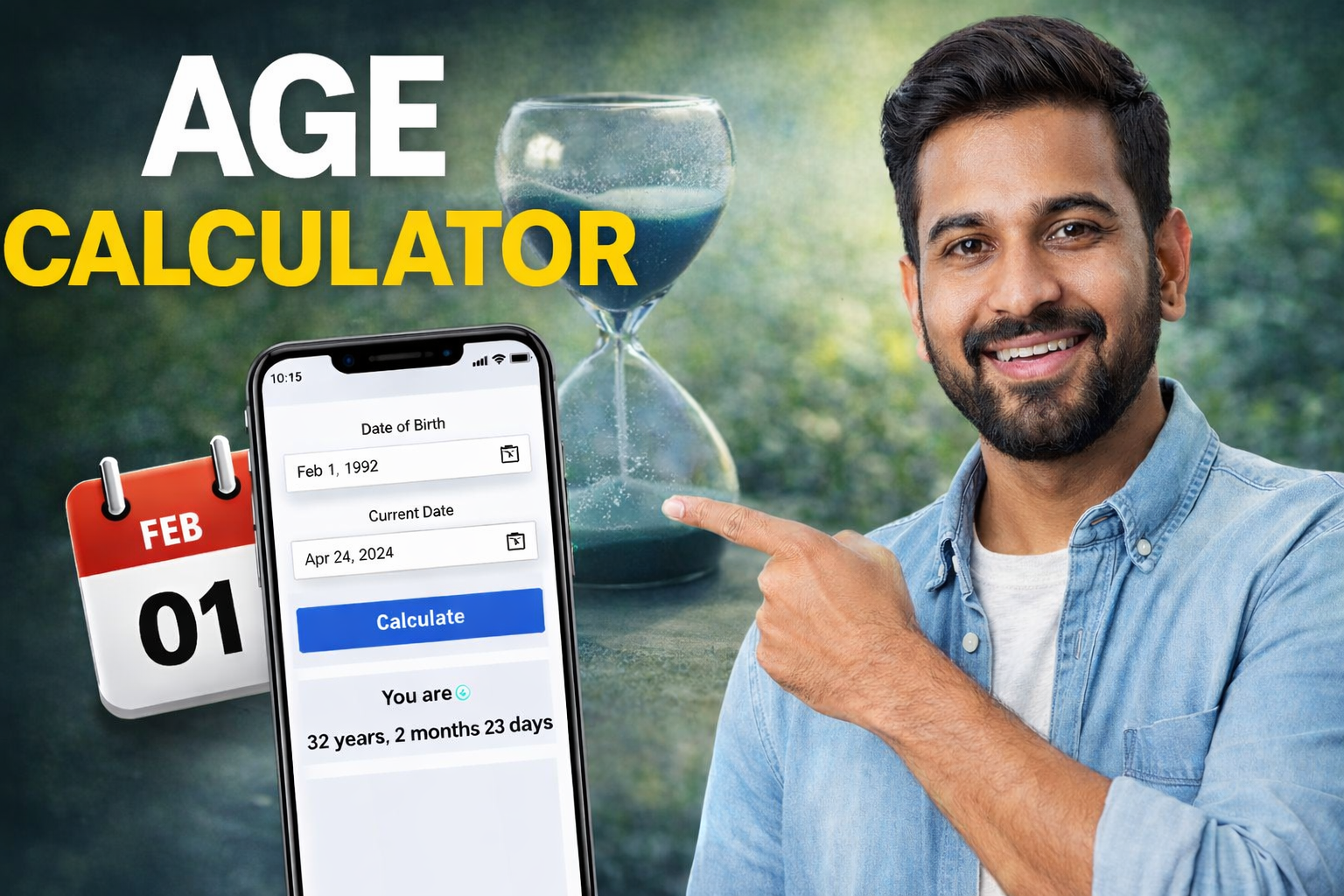
The calculation should account for common calendar complications, including leap years and varying month lengths. The interface should also make it obvious which date is being used as the starting point and which date is being used as the reference point.
A reliable age calculator app should ideally provide clear results without forcing users to interpret complicated mathematical output. If someone enters a birth date and receives a result such as years, months, and days, the information should be presented in a way that makes immediate sense.
Future of Digital Age and Date Calculators
Digital calculators are becoming more convenient as mobile applications and web-based tools continue to improve. Modern interfaces can provide faster input methods, clearer results, and additional date-related functionality. As users become more comfortable with digital tools, even simple calculations are increasingly handled through specialized applications.
Future developments may focus on better personalization and integration with calendars or reminder systems. Instead of merely calculating age, a tool could potentially help users manage birthdays, anniversaries, milestones, and other important dates in one place.
However, the fundamental requirement will remain accuracy. No matter how advanced an application becomes, users ultimately need trustworthy calculations. Simplicity and reliability are likely to remain the most important characteristics of useful age and date tools.
Conclusion
An age calculator app provides a simple solution to a task that can become surprisingly complicated when exact dates are involved. By comparing a birth date with a current or selected reference date, it can determine age in years, months, and days while accounting for different month lengths and leap years. The value of these tools comes from their combination of speed, convenience, and precision. Whether someone is checking their exact age, preparing information for a form, tracking a family milestone, or calculating the time until an important birthday, a reliable digital calculator can eliminate unnecessary manual work.