
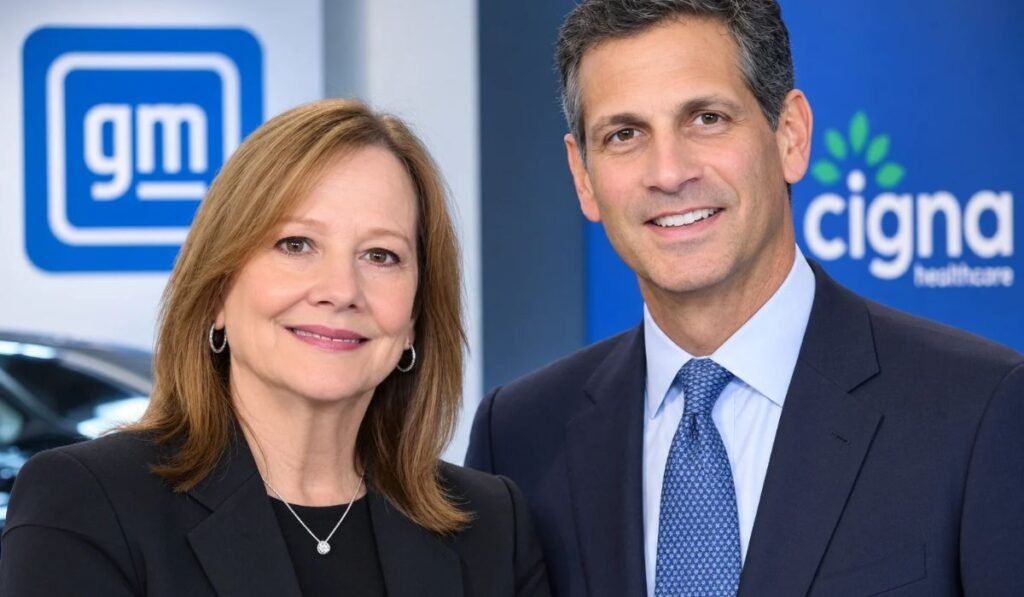
Mary Barra and David Cordani are prominent business leaders whose careers offer valuable insights into corporate leadership, organizational transformation, and long-term business strategy. Barra is widely recognized for leading General Motors, one of the world’s major automotive manufacturers, while Cordani is known for his leadership at Cigna, a global health services organization. Although their professional responsibilities differ significantly, both executives have worked in industries facing substantial changes in technology, customer expectations, operational efficiency, and public scrutiny.
The connection between mary barra and david cordani is particularly interesting from a business perspective because their careers illustrate how leadership principles can be applied across different sectors. The automotive industry is adapting to electric vehicles, software-driven features, and evolving mobility preferences. Healthcare organizations, meanwhile, face challenges involving affordability, access to services, digital innovation, and the coordination of patient care. Examining their professional journeys helps explain how executives respond to complex markets while balancing commercial objectives with broader responsibilities.
Their experiences also demonstrate that modern leadership involves more than financial performance. Business leaders must establish clear priorities, communicate with stakeholders, develop capable teams, and make decisions that influence employees, customers, investors, and communities. Understanding their approaches provides useful lessons for entrepreneurs, management students, professionals, and anyone interested in how large organizations navigate change.
Mary Barra: A Career Built Within the Automotive Industry
Mary Barra’s professional journey is closely associated with General Motors, where she developed extensive experience across engineering, manufacturing, human resources, and executive management. She joined the company as a co-op student while studying electrical engineering at the General Motors Institute, now known as Kettering University. Her early exposure to the technical and operational sides of the automotive business helped establish a foundation for her later responsibilities.
Over the years, Barra held positions that gave her experience with different aspects of a major industrial organization. Her work included manufacturing and engineering responsibilities, as well as leadership roles involving human resources and global product development. This varied background became relevant when she took over as General Motors’ chief executive officer in January 2014. Her appointment was historically significant because she became the first woman to lead a major global automaker.
Leading an established automotive manufacturer requires coordinating enormous operations, including vehicle design, component sourcing, factory production, distribution, customer service, and regulatory compliance. Decisions made at the executive level can affect workers and suppliers across multiple countries. Barra’s career illustrates how knowledge of internal operations can help a leader understand the practical consequences of strategic decisions.
David Cordani: Leadership in Healthcare and Insurance
David Cordani built his career in the health insurance and services sector, eventually becoming a leading executive at Cigna. He joined the organization in 1991 and progressed through several leadership positions before becoming chief executive officer in 2009. His professional development reflects the importance of understanding both the financial structure of healthcare coverage and the service needs of individuals, employers, and healthcare partners.
Healthcare is a complex business environment because it involves insurers, employers, doctors, hospitals, pharmacies, regulators, and patients. These groups have different responsibilities and sometimes competing priorities. Organizations operating in this sector must manage financial sustainability while addressing questions about affordability, access, service quality, and the experiences of people seeking care. Cordani’s leadership at Cigna has been associated with the organization’s development as a broader health services business rather than simply a provider of traditional insurance products.
During his tenure, Cigna expanded its capabilities through strategic initiatives and major corporate transactions, including its 2018 acquisition of Express Scripts. That transaction brought together a health insurance and services organization with a major pharmacy benefit manager. It reflected a wider industry trend toward combining insurance, pharmacy services, and healthcare management capabilities. Such integration can create opportunities to coordinate services, although its actual benefits depend on implementation, costs, competition, and the needs of customers.
Cordani’s career provides a useful example of leadership in an industry where business decisions can have direct consequences for people’s everyday lives. The healthcare sector requires executives to consider operational performance alongside complicated questions about affordability, transparency, and the delivery of services.
What Makes Mary Barra and David Cordani Interesting to Compare?
The careers of mary barra and david cordani offer a useful comparison because both leaders have managed large organizations in industries undergoing significant transformation. Their professional backgrounds differ, but they share the challenge of adapting established businesses to changing customer needs and competitive pressures.

Barra’s responsibilities involve the transformation of a global automotive manufacturer. The shift toward electric vehicles, advanced driver-assistance systems, connected services, and software-defined vehicles requires changes in product development, manufacturing investments, supply chains, and workforce capabilities. Cordani’s leadership experience involves a healthcare system in which technological developments, pharmaceutical costs, consumer expectations, and regulatory requirements influence the way services are organized and delivered.
Both industries also depend on complex relationships with external partners. Automakers work with suppliers, dealerships, technology companies, governments, and charging infrastructure providers. Healthcare organizations coordinate with employers, medical professionals, pharmaceutical companies, government agencies, and benefit administrators. In both settings, a company’s strategy can succeed only when its operational capabilities support its stated objectives.
Another important similarity is the need to communicate change. Employees may have to learn new skills, customers may need to understand unfamiliar products or services, and investors may require evidence that major investments can produce sustainable returns. Effective leadership therefore involves explaining why a strategy matters, identifying realistic milestones, and responding when results differ from expectations.
Leadership Approaches and Business Priorities
Strategic Planning and Organizational Transformation
Strategic planning is essential when an organization must invest today for benefits that may take years to materialize. In the automotive industry, investments in electric vehicles, batteries, software, and manufacturing facilities can require substantial capital. Leaders must assess consumer demand, production costs, infrastructure readiness, competition, and changing regulations before deciding how quickly to pursue different opportunities.
For General Motors, Barra has overseen a period in which electrification and software capabilities became important elements of the company’s long-term strategy. The transition involves more than producing electric models. It also requires building reliable battery supply chains, managing production costs, improving vehicle software, and ensuring that products meet customer expectations. The pace of this transformation depends on market conditions and the company’s ability to execute its plans.
In healthcare, strategic planning must account for medical costs, changing patterns of care, employer expectations, and developments in digital health services. Cordani’s experience at Cigna illustrates how organizations can pursue broader service capabilities to respond to these pressures. However, expansion alone does not guarantee improved outcomes. Healthcare companies must determine whether their services deliver practical value and whether customers can navigate the systems created to support them.
Customer Experience and Trust
Customer trust is important in both industries, although it takes different forms. Automotive customers evaluate safety, reliability, vehicle performance, price, maintenance costs, and the convenience of ownership. A manufacturer must deliver products that meet expectations while addressing recalls, technical problems, and warranty concerns when they arise.
Healthcare customers may evaluate insurance coverage, access to providers, prescription costs, claims processing, and the clarity of their benefits. A confusing process or unexpected expense can create significant frustration, particularly when someone is already dealing with a medical concern. For organizations in this sector, trust depends partly on clear communication and the ability to help people understand and use their coverage.
These differences highlight a shared leadership lesson: customer experience cannot be treated as a marketing issue alone. It must be reflected in product design, service delivery, employee training, internal processes, and accountability. Leaders establish priorities, but employees across the organization determine how those priorities are experienced in practice.
A Comparison of Their Industries and Leadership Responsibilities
The following table summarizes the main differences between their professional environments and the leadership challenges associated with each.
| Business factor | Mary Barra | David Cordani |
|---|---|---|
| Organization | General Motors | Cigna |
| Primary industry | Automotive manufacturing and mobility | Health insurance and health services |
| Career background | Engineering, manufacturing, and executive management | Healthcare services, insurance, and executive management |
| Major strategic themes | Electrification, software, manufacturing, and vehicle innovation | Healthcare affordability, service integration, and access to care |
| Key stakeholder groups | Customers, employees, suppliers, dealers, and investors | Members, employers, healthcare providers, regulators, and investors |
| Central business challenge | Transforming vehicle technology while maintaining competitiveness | Managing healthcare costs while delivering useful services |
The comparison shows that leadership responsibilities depend heavily on the structure of the industry. An automaker must coordinate physical production, engineering, logistics, and product safety. A healthcare organization must manage complex service arrangements, financial risk, benefit administration, and relationships among multiple parties. Neither environment offers a simple formula for success.
At the same time, both require disciplined execution. Strategic ambitions must be translated into measurable goals, supported by appropriate resources, and reviewed against real-world results. A strategy that looks attractive in a presentation may encounter obstacles when it reaches factories, customer service departments, medical networks, or local markets.
Innovation as a Driver of Business Change
Innovation has become a central theme in executive leadership because established business models can lose relevance when technology and customer expectations change. For General Motors, innovation includes electric vehicle platforms, battery technology, manufacturing processes, digital vehicle features, and software development. These areas create opportunities for new products and services, but they also introduce risks involving cost, reliability, competition, and the pace of adoption.
The automotive transition demonstrates why innovation must be supported by practical execution. Consumers may be interested in electric vehicles, for example, but their purchasing decisions can depend on upfront prices, driving range, charging access, battery performance, and resale value. A company must consider these factors together rather than assuming that technological progress automatically produces commercial success.
Healthcare innovation follows a different path. Digital tools, pharmacy services, data analysis, and improved coordination can help organizations manage processes and provide more accessible information. Yet healthcare technology must be implemented carefully because inaccurate information, privacy failures, complicated interfaces, or poorly coordinated services can undermine trust. A digital system is valuable only when it helps people accomplish a meaningful task safely and efficiently.
The experiences associated with mary barra and david cordani demonstrate the importance of connecting innovation to actual customer needs. New technology and expanded services should address identifiable problems, fit into an organization’s operations, and provide benefits that can be assessed over time.
Challenges Facing Corporate Leaders
Senior executives must make decisions under uncertainty. Economic conditions can change, customers can delay purchases, supply chains can become more expensive, and competitors can introduce new products or services. Regulatory developments may also change the requirements governing business operations. These factors make long-term planning difficult, especially when strategic investments involve significant financial commitments.
In the automotive sector, electric vehicle manufacturers must balance product development with production efficiency, pricing, and consumer demand. Established manufacturers also need to maintain existing vehicle businesses while investing in future technologies. Moving too slowly can leave a company behind competitors, while expanding too quickly can expose it to excess capacity or financial pressure if demand does not meet expectations.
Healthcare executives face a different collection of pressures. Rising medical expenses, prescription drug costs, administrative complexity, and concerns about insurance coverage can affect customers and organizations alike. Leaders must consider how their companies can remain financially sustainable while responding to expectations for clearer pricing, dependable service, and accessible healthcare support.
Several practical principles can help organizations manage these challenges:
- Set measurable objectives and review progress regularly rather than relying only on long-term promises.
- Communicate major changes clearly to employees, customers, investors, and business partners.
- Evaluate new technology according to its practical benefits, implementation costs, and potential risks.
- Build organizational flexibility so teams can respond when market conditions or customer expectations change.
These principles apply across industries, but their implementation must reflect the realities of each business. A manufacturing company and a healthcare services organization may use similar management concepts while requiring very different operational processes.
Lessons for Entrepreneurs and Future Business Leaders
The professional journeys of Barra and Cordani offer several lessons for people preparing for leadership roles. One is the value of developing expertise before moving into senior management. Understanding the operational details of an organization can help executives make better-informed decisions and recognize the practical limitations of ambitious plans.
Another lesson is the importance of adapting without abandoning core responsibilities. Companies may need to change their products, technologies, or service models, but they must still deliver the basic value customers expect. An automotive manufacturer must continue to focus on safety and reliability as it develops new vehicle technologies. A healthcare services organization must maintain dependable administration and clear communication as it expands its capabilities.
Their careers also show why leadership requires collaboration. Large organizations depend on specialists with different forms of knowledge, from engineers and financial analysts to customer service professionals and healthcare experts. Executives cannot personally resolve every operational problem. Their role includes establishing priorities, supporting capable teams, encouraging responsible decision-making, and ensuring that departments work toward shared objectives.
For entrepreneurs, these lessons are especially relevant because limited resources make strategic choices more consequential. A smaller company may not have the investment capacity of a global corporation, but it can still learn from disciplined planning, customer-focused innovation, transparent communication, and careful measurement of results.
The Broader Significance of Their Leadership Journeys
The significance of mary barra and david cordani extends beyond their individual corporate positions. Their careers illustrate the changing expectations placed on executives in large, highly visible industries. Business leaders are expected to manage financial performance while addressing technology, workforce development, customer satisfaction, regulation, and public confidence.
Their industries also demonstrate that transformation rarely follows a perfectly predictable path. New technologies may take longer to gain widespread acceptance than expected, and integrated services may not immediately produce better customer experiences. Companies must continually evaluate their assumptions, identify problems, and make adjustments when circumstances change.
It is equally important to distinguish corporate strategy from measurable outcomes. Announcing an ambitious initiative does not establish that it has succeeded. Evaluating leadership requires examining implementation, financial results, customer experiences, employee impacts, and the long-term consequences of business decisions. This approach provides a more balanced understanding than focusing exclusively on public statements or headline announcements.
Conclusion
Mary Barra and David Cordani represent two distinct leadership journeys shaped by the demands of major global industries. Barra’s experience at General Motors highlights the complexities of automotive manufacturing, electrification, software development, and industrial transformation. Cordani’s career at Cigna illustrates the challenges of operating in healthcare services, where affordability, access, service integration, and customer trust remain important concerns.
The comparison of mary barra and david cordani reveals common themes that extend across the business world. Successful leadership requires industry knowledge, long-term planning, responsible innovation, clear communication, and the ability to turn strategic goals into practical results. It also requires acknowledging that business transformation involves trade-offs, uncertainty, and continuous evaluation. For aspiring executives, entrepreneurs, and management students, their professional experiences provide a useful framework for thinking about leadership. The most valuable lesson is not that every organization should follow the same strategy, but that every organization needs to understand its customers, invest carefully in its future, develop capable teams, and remain accountable for the results it delivers. These principles remain relevant as the automotive and healthcare sectors continue to evolve.