
The business world is shaped by influential executives who guide major organizations, make important strategic decisions, and contribute to the development of different industries. Among the prominent names in American corporate leadership are Phebe Novakovic and Brian Moynihan. Both have established distinguished professional careers, earned recognition for their management abilities, and played important roles in organizations that have a significant influence on the American economy. Although their professional responsibilities belong to different sectors, their careers offer interesting examples of executive leadership, organizational development, and long-term business strategy.
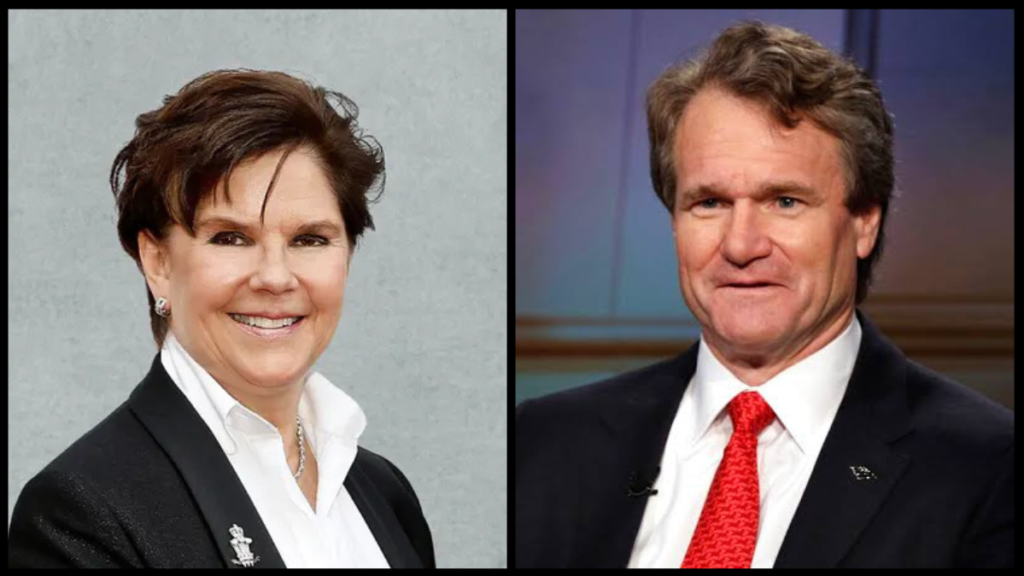
Interest in phebe novakovic and brian moynihan reflects a broader curiosity about influential corporate figures, their professional achievements, and the industries they represent. Novakovic is associated with General Dynamics, a major aerospace and defense company, while Moynihan is widely recognized for his leadership at Bank of America, one of the largest financial institutions in the United States. Their professional experiences demonstrate how executives with different educational backgrounds and career paths can influence complex organizations.
Understanding their individual journeys requires looking beyond their executive titles. Their leadership philosophies, professional decisions, organizational responsibilities, and contributions provide a more complete picture of their importance in American business. It is equally important to distinguish verified professional connections from assumptions, particularly when two influential executives are discussed together.
Who Is Phebe Novakovic?
Phebe Novakovic is an established American business executive known for her leadership in the aerospace and defense industry. She joined General Dynamics in 2001 and gradually assumed increasingly important responsibilities within the organization. Her professional experience includes strategic planning, marine systems, business operations, and executive management. Before entering the corporate sector, she worked in government-related positions, gaining experience in public administration and national security.
Novakovic became chairman and chief executive officer of General Dynamics on January 1, 2013. Under her leadership, the company continued developing its major business divisions, including aerospace, marine systems, combat systems, and technologies. These divisions serve commercial customers as well as government and defense organizations. Her experience in both public service and corporate management has contributed to her reputation as an executive familiar with complicated operational environments and long-term institutional planning.
Her career is particularly interesting because the defense industry requires a combination of financial discipline, technological understanding, operational reliability, and awareness of government priorities. Managing an organization with international operations and substantial industrial responsibilities requires careful coordination across multiple business areas.
Phebe Novakovic’s Professional Background and Achievements
Novakovic’s career demonstrates how experience in public service can become valuable in corporate leadership. Before joining General Dynamics, she served in government positions, including work with the Office of Management and Budget and the Central Intelligence Agency. Between 1997 and 2001, she also worked as a special assistant to the Secretary and Deputy Secretary of Defense. These responsibilities gave her exposure to national security matters, government decision-making, and complex administrative structures.
Her educational background also contributed to her professional development. She graduated from Smith College in 1979 and later earned an MBA from the Wharton School at the University of Pennsylvania in 1988. Her combination of academic preparation, government experience, and corporate responsibilities helped establish a foundation for her later executive career. Her professional journey illustrates the value of combining strategic thinking with practical management experience.
Leadership at General Dynamics
General Dynamics operates across several important areas of the defense and aerospace industry. Its business activities include manufacturing military vehicles, developing advanced technologies, building submarines and ships, and producing business aircraft through its aerospace operations. These activities require significant investment, technical expertise, skilled employees, and long-term relationships with customers.
During Novakovic’s tenure as CEO, the company maintained its position as an important supplier of defense equipment and aerospace products. Her responsibilities involved overseeing business performance, supporting innovation, managing organizational priorities, and maintaining relationships with government customers. The company operates in an environment where product reliability, safety, regulatory requirements, and delivery schedules are particularly important.
An important development occurred in October 2026 when General Dynamics announced that Danny Deep, then company president, had been elected to succeed Novakovic as CEO, effective January 1, 2027. Novakovic is scheduled to transition into the position of executive chairman. This planned leadership change represents a significant stage in the company’s management succession process.
Who Is Brian Moynihan?
Brian Moynihan is an influential American banking executive best known for his leadership at Bank of America. He became the company’s chief executive officer in January 2010 and subsequently became chairman of its board in October 2014. His professional background includes extensive experience in financial services, business management, corporate law, and banking operations.
Moynihan’s leadership has involved guiding Bank of America through changing economic conditions, evolving customer expectations, technological developments, and financial industry regulations. The institution provides services to individuals, small businesses, corporations, and institutional investors. Its operations include consumer banking, commercial banking, investment banking, wealth management, and financial markets.
His approach to corporate management emphasizes responsible growth, financial stability, customer relationships, and long-term business performance. Managing an institution of this size requires coordination across different business divisions, careful evaluation of financial risks, and continuous attention to regulatory expectations. His career provides an example of how leadership in modern banking involves balancing profitability with responsible financial practices.
Brian Moynihan’s Professional Journey and Achievements
Moynihan’s professional journey combines legal education with extensive experience in financial services. He earned a Bachelor of Arts degree from Brown University in 1981 and later obtained his law degree from the University of Notre Dame. His legal background provided an understanding of regulatory frameworks, institutional responsibilities, and business agreements, all of which are relevant to the banking sector.

Before becoming Bank of America’s CEO, he held several important positions within the financial services industry. He worked at FleetBoston Financial and later became part of Bank of America following its acquisition of FleetBoston in 2004. Over time, he assumed leadership responsibilities across different business units, gaining experience in consumer banking, wealth management, and other financial operations.
His appointment as CEO in 2010 came during a challenging period for the American banking industry. Financial institutions were dealing with the consequences of the global financial crisis, increased regulatory scrutiny, and changing expectations from customers and investors. Moynihan’s responsibilities included strengthening the company’s operations, managing financial risks, and developing a strategy for sustainable growth.
His Leadership at Bank of America
Bank of America operates on a large scale, serving millions of customers through physical branches, digital platforms, financial advisors, and business banking services. Under Moynihan’s leadership, the institution has continued investing in digital banking, cybersecurity, customer experience, and financial technology. These areas have become increasingly important as consumers expect convenient access to financial services.
His management responsibilities also include overseeing corporate governance, maintaining investor confidence, and ensuring that the organization follows applicable financial regulations. Banking executives must consider changing interest rates, economic uncertainty, credit conditions, and international financial developments when making strategic decisions.
Moynihan also participates in several business and civic organizations. His involvement in economic discussions and institutional leadership demonstrates that his professional responsibilities extend beyond the daily operations of Bank of America. He was elected chancellor of Brown University in 2024, adding an important educational leadership responsibility to his professional activities.
Understanding the Professional Connection Between Phebe Novakovic and Brian Moynihan
One reason people search for phebe novakovic and brian moynihan together is an interest in understanding whether the two executives have a professional, personal, or organizational connection. Both are prominent figures in American corporate leadership, and their names appear in discussions about business strategy, executive management, and major publicly traded companies.
However, it is important to establish what publicly available information actually demonstrates. Novakovic is associated with General Dynamics, while Moynihan leads Bank of America. Their principal executive responsibilities therefore belong to different industries. There is no established public evidence confirming that they are relatives, business partners, or participants in a specific joint leadership arrangement.
There is, nevertheless, an interesting corporate-governance detail. Novakovic serves on the board of directors of JPMorgan Chase, a major financial institution that competes with Bank of America. This creates an indirect connection through the broader American financial and corporate landscape, but it should not be interpreted as evidence of a direct partnership between the two executives.
Why Are Their Names Discussed Together?
There are several reasonable explanations for the shared interest in these executives. Both hold influential positions in major American corporations, both have substantial management experience, and both operate in industries that are important to national and international economic activity.
Their careers also offer an interesting comparison between two different forms of executive responsibility. Novakovic’s professional environment involves defense manufacturing, aerospace technology, government contracts, and industrial operations. Moynihan’s responsibilities involve financial services, lending, investment activities, customer relationships, and banking regulation.
Their professional similarities and differences can help readers understand how executive leadership changes according to the nature of an organization.
Comparing Their Leadership Roles and Industries
Although these executives work in different sectors, their careers demonstrate the importance of strategic planning, organizational discipline, and long-term decision-making. Comparing their responsibilities provides a useful perspective on how major American corporations operate.
| Comparison | Phebe Novakovic | Brian Moynihan |
|---|---|---|
| Primary organization | General Dynamics | Bank of America |
| Industry | Aerospace and defense | Banking and financial services |
| Major leadership role | Chairman and CEO through December 2026 | Chairman and CEO |
| CEO appointment | January 2013 | January 2010 |
| Educational background | Smith College and Wharton School | Brown University and Notre Dame Law School |
| Professional experience | Government, defense, corporate management | Law, banking, financial management |
| Major responsibilities | Defense, aerospace, industrial operations | Banking, financial services, corporate strategy |
The comparison highlights how executive responsibilities depend on the nature of the organization. A defense company must maintain manufacturing capabilities, technological development, supply-chain reliability, and compliance with government requirements. A banking institution must focus on financial stability, customer services, lending decisions, investment activities, and risk management. Although their daily responsibilities differ, both executives operate in highly regulated industries where organizational decisions can have significant economic consequences.
What Makes Their Leadership Styles Interesting?
Leadership is not simply about holding an executive position. It involves setting priorities, communicating organizational goals, managing employees, and responding effectively to unexpected challenges. The professional experiences of phebe novakovic and brian moynihan illustrate different approaches to these responsibilities.
Novakovic’s career reflects the importance of combining government experience with industrial management. Her understanding of national security and public administration has been relevant to General Dynamics because the company’s business activities are closely connected with government requirements and defense priorities. Her leadership responsibilities have involved balancing commercial performance with the operational demands of complex aerospace and defense programs.
Moynihan’s career demonstrates the importance of financial discipline and institutional management. Banks operate in an environment where economic developments can quickly influence lending, investments, customer confidence, and profitability. His leadership approach has emphasized responsible growth and maintaining the financial institution’s ability to serve customers across changing market conditions.
Common Leadership Qualities
Despite their different industries, several professional qualities are relevant to understanding their careers:
-
Strategic planning: Both executives have responsibilities involving long-term organizational priorities.
-
Risk management: Their industries require careful evaluation of financial, operational, and regulatory risks.
-
Corporate governance: Both operate within established board and management structures.
-
Organizational development: Their leadership responsibilities involve supporting employees, business operations, and institutional performance.
These qualities are not unique to either executive. They are essential characteristics of successful leadership in large organizations, particularly those operating in industries with extensive regulatory and financial responsibilities.
Their Influence on the American Business Environment
The influence of major corporate executives extends beyond the organizations they lead. Their decisions can affect employees, suppliers, customers, investors, and the broader economy. General Dynamics contributes to the American aerospace and defense industrial base through its manufacturing operations, technological capabilities, and government-related business activities.
Its operations also support specialized employment opportunities, engineering development, manufacturing expertise, and relationships with suppliers. Decisions concerning production capacity, research, investment, and workforce development can influence the wider industrial ecosystem. This makes leadership at a major defense contractor important from both business and national security perspectives.
Bank of America has a different but equally significant economic role. Financial institutions provide the services necessary for individuals and businesses to manage money, obtain credit, conduct transactions, and invest for the future. The bank’s operations connect households, small businesses, large corporations, and financial markets. Decisions involving digital services, lending standards, financial security, and customer support can influence economic activity across different communities.
The careers of phebe novakovic and brian moynihan therefore represent two important dimensions of the American business environment. One is connected with industrial and defense capabilities, while the other is associated with financial infrastructure. Together, their professional stories provide an opportunity to examine how different industries contribute to economic development.
Challenges Faced by Executives in Their Industries
Modern corporate leaders face challenges that require more than traditional management experience. They must understand technological developments, changing regulations, international markets, employee expectations, and the increasing importance of organizational transparency.
For a defense and aerospace organization, some major challenges include maintaining production efficiency, managing complex supply chains, developing advanced technologies, and meeting government requirements. Defense companies must also consider changing international security conditions and the availability of specialized components. Long development timelines make strategic planning particularly important because decisions made today can influence products and operations for many years.
Banking executives face a different combination of challenges. Digital transformation has changed how customers interact with financial institutions, while cybersecurity threats have increased the importance of protecting financial information. Banks must also respond to interest-rate changes, economic uncertainty, regulatory developments, and competition from financial technology companies. Maintaining customer confidence is essential because trust is one of the foundations of the banking industry.
These challenges demonstrate why executive leadership requires continuous learning. Successful organizations must adapt their strategies while maintaining the standards and responsibilities expected by customers, employees, shareholders, and regulators.
The Importance of Corporate Governance and Leadership Succession
Corporate governance plays an essential role in maintaining organizational accountability. Large companies generally rely on boards of directors, executive management teams, internal controls, and established reporting structures. These systems help ensure that important decisions are reviewed and that leadership responsibilities remain clearly defined.
General Dynamics’ October 2026 announcement regarding Novakovic’s planned transition is an example of leadership succession in practice. Danny Deep is scheduled to become CEO on January 1, 2027, while Novakovic will move into the executive chairman position. Such transitions are important because they provide continuity while allowing new executives to assume operational responsibilities.
Bank of America’s governance structure also demonstrates the importance of clearly defined executive and board responsibilities. Moynihan has served as CEO since 2010 and chairman since 2014. The company has also announced leadership changes involving co-presidents and other senior executives, reflecting the need to distribute responsibilities across a large financial organization.
For readers researching phebe novakovic and brian moynihan, these developments offer an additional perspective. Executive success is not limited to individual achievements; it also involves building capable management teams and establishing structures that support organizational continuity.
What Readers Can Learn From Their Professional Journeys
The professional experiences of these executives offer useful lessons for business students, aspiring managers, entrepreneurs, and individuals interested in corporate leadership. Their careers show that reaching senior management positions often requires years of professional development, a strong understanding of an industry, and the ability to manage responsibilities that affect many stakeholders.
One important lesson is the value of continuous professional growth. Novakovic developed experience across government and corporate environments before becoming the leader of General Dynamics. Moynihan built his career through legal education, financial services, and increasingly senior management positions. Their experiences demonstrate that professional success can follow different paths rather than a single predetermined route.
Another lesson is the importance of making informed decisions. Leaders in large organizations must consider the potential consequences of their actions before committing resources or changing business strategies. They also need to communicate effectively with employees, investors, customers, and other stakeholders. These abilities are valuable across industries, regardless of an organization’s size or primary business activities.
For anyone studying phebe novakovic and brian moynihan, the most interesting takeaway is how different professional backgrounds can lead to influential leadership positions. Their careers demonstrate the importance of expertise, adaptability, accountability, and the ability to manage complex organizations.
Future Outlook for Their Professional Legacies
The future significance of Novakovic’s career will be closely associated with her contributions to General Dynamics and her upcoming transition into the executive chairman role. Her successor, Danny Deep, is expected to take over the CEO position in January 2027. This transition will provide an opportunity to evaluate how the company maintains its strategic priorities while developing its next phase of leadership.
For Moynihan, the continuing evolution of financial services will remain an important part of his leadership responsibilities. Digital banking, artificial intelligence, cybersecurity, changing customer expectations, and financial regulation are likely to influence the industry’s direction. Bank of America’s ability to respond to these developments will remain an important consideration for customers, investors, and industry observers.
The broader professional legacies of both executives will be evaluated through organizational performance, governance, business development, and their contributions to their respective industries. Their careers also demonstrate that successful leadership involves preparing organizations for challenges that may extend beyond an individual executive’s tenure.
Conclusion
The professional journeys of Phebe Novakovic and Brian Moynihan provide valuable insight into two important areas of the American economy. Novakovic has built a distinguished career in government, aerospace, and defense leadership, while Moynihan has established himself as a major figure in banking and financial services. Their experiences demonstrate how industry knowledge, strategic thinking, and organizational management contribute to executive leadership.
Understanding phebe novakovic and brian moynihan also requires recognizing the distinction between their individual careers and any suggested personal or business relationship. They lead organizations in different sectors, and there is no established public evidence of a direct partnership or family connection between them. Their professional importance comes primarily from their respective leadership responsibilities and contributions to major American corporations.