
Introduction
A calculator is one of the most useful tools for solving mathematical problems quickly and accurately. From simple addition and subtraction to advanced scientific calculations, a calculator helps students, professionals, business owners, engineers, and everyday users save time while reducing errors. Although mental math is valuable, modern life often requires quick and precise calculations, making the calculator an essential companion.
Over the years, calculators have evolved from simple handheld devices to powerful digital tools available on computers, smartphones, and websites. Whether you are calculating monthly expenses, determining discounts while shopping, solving algebra equations, or planning a budget, a calculator makes the process faster and easier. Because of its convenience, calculators have become an important part of education, finance, engineering, healthcare, and many other industries. This guide explains everything you need to know about calculators, including their types, features, benefits, and practical applications.
What Is a Calculator?
A calculator is an electronic or digital device designed to perform mathematical operations automatically. Instead of solving equations manually, users simply enter numbers and mathematical operators, and the calculator instantly displays the result. Depending on its design, a calculator may support basic arithmetic, percentages, square roots, trigonometric functions, logarithms, statistical calculations, and much more.
Modern calculators are available in multiple forms. Some are physical handheld devices with dedicated buttons, while others are software applications on computers and smartphones. Online calculators have also become increasingly popular because they are accessible from almost any device without requiring installation. Regardless of the format, every calculator shares the same purpose—making calculations easier, faster, and more accurate.
Evolution of the Calculator
The history of the calculator reflects humanity’s continuous effort to simplify mathematical work. Early civilizations relied on counting tools such as the abacus. These devices helped merchants and traders perform arithmetic efficiently long before electronic technology existed.
Mechanical calculating machines later replaced manual tools and introduced gears and levers for performing calculations. Eventually, electronic calculators emerged in the twentieth century, revolutionizing mathematics by producing instant results. Today, digital technology has integrated calculators into smartphones, tablets, laptops, and web applications, allowing users to perform calculations anytime and anywhere. This evolution demonstrates how the calculator has transformed from a simple counting aid into a powerful computational tool.
Different Types of Calculators
Different situations require different types of calculators. Understanding their purposes helps users choose the right one for their needs.
| Calculator Type | Primary Purpose | Common Users |
|---|---|---|
| Basic Calculator | Addition, subtraction, multiplication, division | Students, home users |
| Scientific Calculator | Advanced mathematical functions | Students, engineers |
| Financial Calculator | Interest, loans, investments | Bankers, accountants |
| Graphing Calculator | Graph plotting and equations | Mathematics students |
| Online Calculator | Quick calculations through websites | General users |
| Business Calculator | Tax, profit, accounting calculations | Business professionals |
Each type offers specialized features that improve productivity for specific tasks while maintaining speed and accuracy.
Main Features of a Calculator
A calculator includes several useful features that simplify everyday mathematics. Basic calculators perform arithmetic operations such as addition, subtraction, multiplication, and division. More advanced models include memory functions that allow users to store numbers temporarily for future calculations.
Many calculators also provide percentage calculations, square roots, exponent functions, decimal handling, and parentheses support for solving complex equations correctly. Scientific versions include trigonometric functions, logarithms, factorials, and statistical operations. These capabilities allow users to solve problems ranging from simple household budgeting to advanced engineering calculations with confidence and precision.
Benefits of Using a Calculator
Using a calculator provides numerous advantages in both personal and professional life. The biggest benefit is speed. Calculations that might take several minutes manually can often be completed within seconds using a calculator.
Accuracy is another significant advantage. Human errors frequently occur during long calculations, but calculators greatly reduce the likelihood of mistakes when numbers are entered correctly. They also improve productivity by allowing users to focus on analysis and decision-making rather than repetitive arithmetic. Students can verify answers, businesses can calculate financial figures efficiently, and individuals can manage budgets more effectively. These benefits explain why calculators remain one of the most widely used mathematical tools across the world.
Everyday Uses of a Calculator
People use calculators in many daily activities without even realizing how essential they have become. Students rely on calculators for homework, assignments, examinations where permitted, and mathematical practice. Professionals use them to calculate salaries, taxes, expenses, profits, and business forecasts.
Homeowners use calculators while planning monthly budgets, calculating utility bills, comparing shopping discounts, and estimating renovation costs. Travelers may calculate fuel expenses, distances, and travel budgets. Fitness enthusiasts often calculate calorie intake and body measurements. Because a calculator serves so many purposes, it continues to be one of the most practical tools for everyday problem-solving.
Why Calculators Are Important in Education
Education is one of the fields where calculators have made the greatest impact. Students learn mathematical concepts more efficiently by checking answers and verifying complex calculations. Teachers also use calculators to demonstrate formulas and mathematical principles during lessons.
Rather than replacing mathematical understanding, calculators encourage learners to focus on concepts, logical thinking, and problem-solving strategies. By reducing the time spent on lengthy arithmetic, students can dedicate more attention to understanding equations, interpreting results, and developing analytical skills.
Calculator in Business and Finance
Businesses depend on a calculator every day to manage finances accurately and efficiently. Whether it is a small retail shop or a large corporation, calculations play a major role in making informed decisions. Business owners use calculators to determine profits, losses, discounts, taxes, inventory costs, and employee salaries. Financial professionals rely on calculators to prepare budgets, estimate returns on investments, calculate loan repayments, and analyze financial reports. Even freelancers and self-employed individuals use calculators to track project costs and earnings. By reducing manual errors, calculators improve financial accuracy and save valuable time. As business operations become more data-driven, calculators remain essential tools that support better planning, budgeting, and decision-making across industries.
Choosing the Right Calculator
Selecting the right calculator depends on your specific needs. Students studying basic mathematics usually need only a standard calculator that performs simple arithmetic operations. Those studying science, engineering, or advanced mathematics benefit from scientific calculators with additional functions such as trigonometry, logarithms, and exponents.
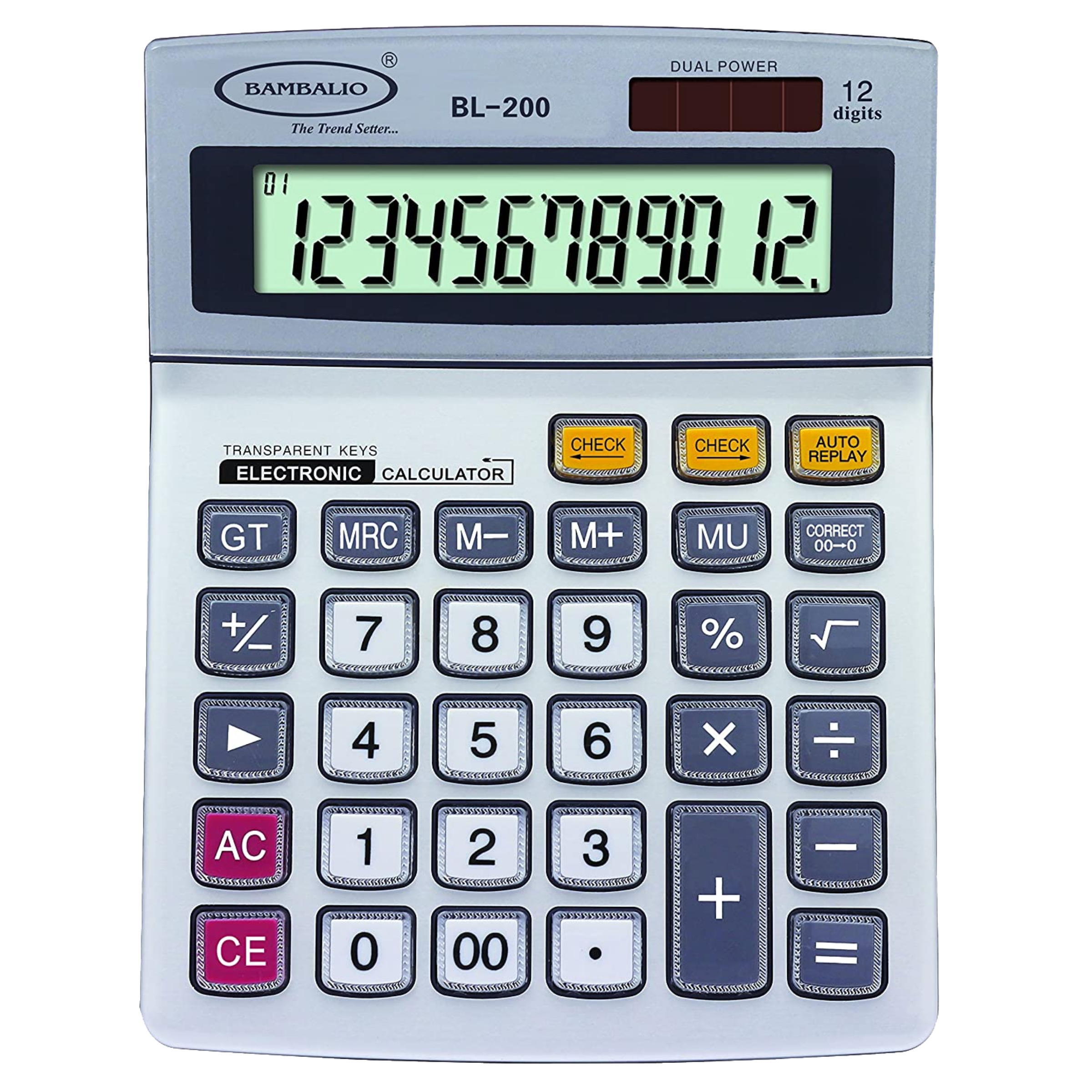
Professionals working in finance often prefer financial calculators that can calculate interest rates, loan payments, and investment returns. Graphing calculators are ideal for advanced mathematics because they can plot graphs and solve complex equations. Meanwhile, online calculators are convenient for users who need quick calculations without purchasing a physical device. Before choosing a calculator, consider factors such as ease of use, available functions, display quality, battery life, portability, and overall reliability. Selecting the appropriate calculator ensures better productivity and a smoother user experience.
Tips for Using a Calculator Effectively
Although calculators are simple to operate, using them correctly helps achieve more accurate results.
- Always double-check the numbers before pressing the equals button.
- Learn important functions such as memory keys, percentages, and square roots to improve efficiency.
Developing these habits minimizes calculation mistakes and helps users become more confident while solving mathematical problems. Whether you are handling personal finances or solving academic assignments, careful use of a calculator improves both speed and accuracy.
Common Mistakes While Using a Calculator
Despite their reliability, calculators only produce correct answers when the correct inputs are provided. One common mistake is entering numbers incorrectly, which immediately leads to inaccurate results. Users may also forget decimal points, choose the wrong mathematical operation, or misread the displayed answer.
Another frequent error involves misunderstanding the order of operations when solving longer equations. Although many modern calculators automatically follow mathematical precedence, incorrect use of parentheses may still produce unexpected outcomes. Failing to clear previous entries before beginning a new calculation can also create confusion. Understanding these common mistakes helps users make better use of their calculator while maintaining confidence in the final answer.
The Future of Calculators
Technology continues to improve the capabilities of the calculator. Modern digital calculators now include cloud integration, touchscreen interfaces, voice input, and programmable features. Smartphone applications have replaced many traditional handheld calculators by providing advanced mathematical functions in a portable format.
Educational platforms increasingly integrate calculators into online learning environments, making mathematics more interactive for students. Businesses also use specialized financial calculators within accounting software to automate calculations. As technology advances, calculators are expected to become even smarter, offering faster processing, improved accuracy, and seamless integration with other digital tools. Despite these innovations, the fundamental purpose of a calculator remains unchanged: simplifying mathematical calculations for everyone.
Why Every Person Should Learn to Use a Calculator
Learning to use a calculator is a valuable skill regardless of age or profession. Children benefit from understanding basic arithmetic, while college students use calculators to solve complex equations. Adults rely on calculators for budgeting, shopping comparisons, tax calculations, and financial planning.
Knowing how to use a calculator efficiently also builds confidence when making numerical decisions. Instead of spending unnecessary time performing lengthy calculations manually, users can focus on interpreting results and making informed choices. As a result, calculators contribute to greater productivity in education, workplaces, and everyday life.
Calculator vs Mental Calculation
Many people wonder whether calculators reduce mathematical ability. In reality, both approaches complement each other. Mental calculation strengthens logical thinking, memory, and number sense, while a calculator increases speed and minimizes errors during larger or more complex calculations.
For everyday arithmetic, mental math remains useful. However, when dealing with financial planning, engineering formulas, scientific research, or large numerical datasets, calculators provide unmatched efficiency and reliability. Using both methods together creates a balanced approach to solving mathematical problems.
Conclusion
The calculator has become one of the most valuable mathematical tools in modern life. From classrooms and offices to homes and businesses, it helps people solve problems quickly, accurately, and efficiently. Whether you need to perform basic arithmetic, calculate financial figures, or solve advanced mathematical equations, the right calculator can significantly improve productivity while reducing the chances of human error.
As technology continues to evolve, calculators will become even more powerful and accessible across digital devices. Understanding their features, selecting the appropriate type, and using them correctly allows users to maximize their benefits. For students, professionals, and everyday users alike, the calculator remains an indispensable companion that simplifies mathematics and supports better decision-making in countless situations.