
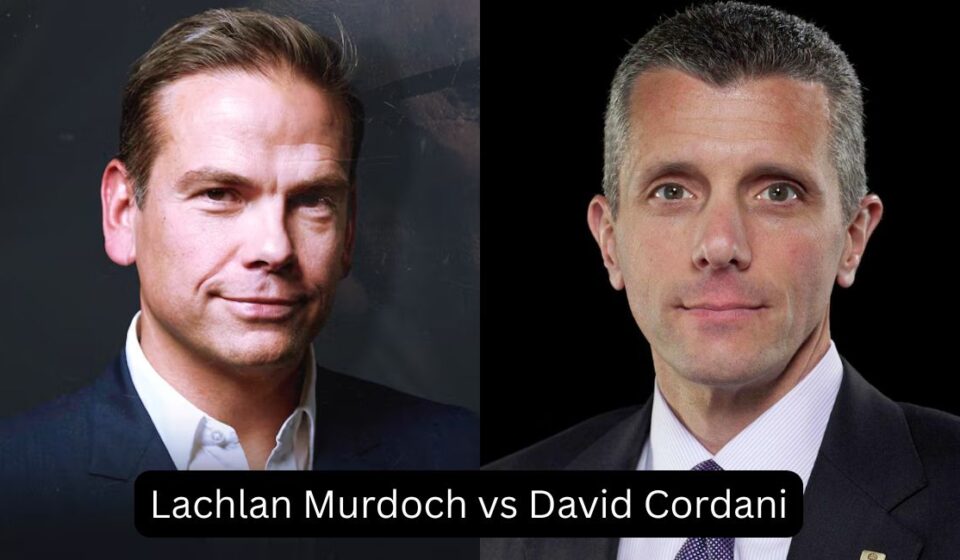
Modern business leadership takes many forms, from guiding influential media organizations to managing complex healthcare services. Some executives build their reputations through strategic decisions that shape public conversations, while others focus on improving access to essential services and strengthening large organizations. Lachlan Murdoch and David Cordani represent two different approaches to leadership, offering an interesting perspective on how executives navigate competition, organizational change, public expectations, and long-term business performance.
Although Lachlan Murdoch and David Cordani work in different industries, their professional journeys highlight the importance of decision-making at the highest levels of corporate management. Murdoch is known for his leadership in the global media business and his role within Fox Corporation. Cordani is recognized for his extensive leadership experience at Cigna, where healthcare services, insurance, employee well-being, and business transformation have been central priorities. Their careers demonstrate how leadership responsibilities differ depending on the industry, the customers served, and the broader environment in which a company operates.
Examining these executives together provides a useful opportunity to understand the changing expectations placed on business leaders. Media companies must respond to technological disruption, evolving audience habits, and debates about information. Healthcare organizations must balance affordability, quality, regulation, and the needs of members and employers. Their experiences illustrate how strategy, accountability, communication, and adaptability can influence an organization’s direction without suggesting that the two executives share a direct professional partnership.
Who Is Lachlan Murdoch?
Lachlan Murdoch is an Australian-born business executive associated with one of the world’s most prominent media families. He developed his career within the media businesses founded and expanded by his father, Rupert Murdoch, gaining experience in publishing, broadcasting, and corporate management. Over time, he assumed increasingly senior responsibilities, helping oversee businesses operating in a rapidly changing media environment. His career reflects the challenges of managing established media brands while responding to new competitors, changing audience preferences, and the growing importance of digital distribution.
As chairman and chief executive of Fox Corporation, Murdoch occupies a leadership position involving strategic direction, executive oversight, financial performance, and relationships with shareholders. The company operates across television broadcasting, news, sports, and other media activities. These businesses require decisions about programming, distribution, advertising, audience engagement, and investment. Leadership in this environment also involves managing reputational concerns and responding to public scrutiny, particularly when news organizations play an influential role in political and cultural discussions.
Murdoch’s professional responsibilities illustrate the complexity of leading a major media enterprise. Success depends not only on attracting viewers but also on maintaining commercially sustainable operations as audiences increasingly consume content through streaming services, mobile devices, and digital platforms. Traditional broadcasting continues to have value, particularly for live news and sports, but companies must continually evaluate how people discover, watch, and pay for content.
Who Is David Cordani?
David Cordani is an experienced American healthcare executive best known for his leadership at Cigna, a major health services and insurance organization. His career has involved managing complex healthcare operations, developing business strategies, and navigating an industry shaped by regulation, rising medical costs, technological innovation, and changing expectations among employers and patients. His leadership has emphasized the role of integrated services, preventive care, and organizational capabilities in responding to healthcare needs.
Cordani became president and chief executive officer of Cigna in 2009 and subsequently guided the company through significant strategic developments. His tenure included the expansion of healthcare services, efforts to strengthen relationships with customers and employers, and the company’s major acquisition of Express Scripts, completed in 2018. That transaction brought together health insurance capabilities and pharmacy benefit management, reflecting a broader industry interest in coordinating services and managing prescription drug costs. Such strategies also brought complicated questions about integration, transparency, affordability, and the value delivered to healthcare consumers.
The healthcare industry presents a distinct set of leadership challenges. Insurance providers must consider financial sustainability while responding to the needs of members, healthcare professionals, employers, regulators, and communities. Decisions about coverage, pharmacy services, digital tools, and preventive care can affect millions of people. Cordani’s executive experience therefore offers an example of leadership in a sector where commercial performance must be considered alongside service quality, public expectations, and the practical consequences of healthcare decisions.
Different Industries, Different Leadership Priorities
The professional paths of Lachlan Murdoch and David Cordani demonstrate how industry conditions shape executive responsibilities. Media organizations compete for attention, advertising revenue, distribution partnerships, and valuable programming. Healthcare organizations operate within a more heavily regulated environment where coverage arrangements, medical expenses, prescription drugs, and access to care have significant financial and personal consequences. Although both industries rely on sophisticated management and strategic investment, their measures of success are not identical.
For Murdoch, leadership decisions may involve maintaining the strength of established broadcasting operations while evaluating opportunities in digital content, live sports, and changing advertising markets. For Cordani, strategic priorities have included healthcare service integration, pharmacy benefit management, and the development of capabilities intended to support customers and employers. These differences show why effective leadership cannot be reduced to one universal formula. Strategies must reflect the organization’s purpose, market structure, financial responsibilities, and stakeholders.
| Leadership factor | Lachlan Murdoch | David Cordani |
|---|---|---|
| Primary industry | Media and broadcasting | Healthcare and health services |
| Key organizational association | Fox Corporation | Cigna |
| Main strategic concerns | Content, audiences, distribution, and advertising | Healthcare access, costs, services, and customer needs |
| Industry pressures | Digital disruption and changing media consumption | Regulation, medical expenses, and healthcare complexity |
| Leadership emphasis | Media operations and corporate strategy | Healthcare management and service integration |
This comparison highlights how executive decisions respond to different commercial realities. A media company may assess whether its programming attracts loyal audiences and advertisers, while a healthcare organization may examine service quality, operating costs, customer experience, and the effectiveness of its care-related offerings. Both need financial discipline, but the outcomes they pursue and the responsibilities they carry differ substantially.
Strategic Decision-Making in a Changing Business Environment
Strategic leadership requires executives to identify emerging risks before they become major obstacles. In media, technological change has altered how people access news, entertainment, and sports. Digital platforms compete with traditional television, advertisers have more ways to reach audiences, and consumers increasingly expect convenient access across multiple devices. Leaders must decide which capabilities deserve investment and which business models can remain sustainable as audience behavior changes.

For Fox Corporation, these pressures make the relationship between established media properties and evolving distribution channels particularly important. Live sports, recognizable programming, and established news brands can help differentiate a company, but maintaining their commercial value requires attention to costs, partnerships, audience expectations, and technological development. Murdoch’s leadership responsibilities involve evaluating these considerations while protecting the company’s long-term competitive position.
Healthcare strategy involves another set of difficult trade-offs. Organizations must respond to increasing demand for services, complex payment arrangements, prescription drug expenses, and expectations for easier access to information and support. Leaders must consider whether technology can simplify administrative processes, improve communication, and help members navigate healthcare services. They must also assess whether acquisitions, partnerships, and organizational changes produce meaningful benefits rather than simply increasing corporate scale.
Cordani’s experience at Cigna illustrates the importance of connecting strategic decisions to the structure of healthcare delivery and financing. Integrating insurance and pharmacy benefit management can create opportunities to coordinate services and manage costs, but integration alone does not guarantee better outcomes. Effective execution requires attention to operational complexity, customer experience, transparency, and the needs of people using the system. These considerations are relevant to any executive overseeing a large organization during a period of structural change.
Leadership, Corporate Governance, and Accountability
Corporate leadership involves more than developing business plans or delivering financial results. Senior executives must establish priorities, communicate expectations, oversee management teams, and ensure that their organizations operate within appropriate governance structures. They also need to respond when decisions attract criticism or when market conditions undermine earlier assumptions. These responsibilities become particularly important in large companies whose decisions affect employees, customers, investors, and communities.
In the media industry, governance questions can involve editorial independence, corporate oversight, content standards, and the relationship between commercial objectives and public trust. Murdoch’s position at Fox Corporation places him within a business environment where news programming and corporate decisions can attract considerable public attention. The company’s long-term performance depends on its ability to sustain commercially valuable operations while managing legal, reputational, and competitive risks. Investors may focus on revenue, profitability, and strategic execution, while audiences and other stakeholders may evaluate the company through different expectations.
Healthcare leadership involves comparable accountability, although the underlying concerns differ. Insurance coverage, pharmacy benefit arrangements, administrative practices, and healthcare costs can influence people’s ability to obtain services and manage medical expenses. Executives must understand how corporate policies affect members and employers while maintaining compliance with applicable laws and regulations. Cordani’s experience illustrates the importance of balancing organizational growth with the practical realities of healthcare delivery and financing. In both industries, strong governance requires clear responsibilities, reliable information, and a willingness to evaluate the consequences of major decisions.
How Technology Is Reshaping Executive Leadership
Technology has become a central factor in corporate strategy, influencing how companies operate, communicate with customers, and develop new sources of value. For media organizations, streaming platforms, audience analytics, automated production tools, and digital advertising systems have changed the competitive landscape. Traditional broadcasters can no longer rely exclusively on established viewing habits. They must understand how audiences move between television, smartphones, connected devices, and online services.
For executives such as Murdoch, this transformation creates opportunities as well as risks. Digital distribution can extend the reach of content, provide additional ways to engage viewers, and create new commercial opportunities. However, technology also increases competition and can weaken established revenue models. Successful adaptation requires investment decisions that account for audience demand, licensing arrangements, infrastructure, and the economics of producing and distributing premium content. Artificial intelligence adds another dimension by creating opportunities for operational efficiency while raising questions about accuracy, copyright, privacy, and responsible use.
Healthcare organizations are experiencing a similarly significant technological shift. Digital health platforms, electronic records, data analytics, and AI-assisted administrative tools can help simplify processes and improve how information is shared. Health services companies may use technology to identify service gaps, support members in navigating their benefits, and make certain administrative tasks more efficient. Nevertheless, healthcare data is particularly sensitive, and technological innovation must be accompanied by robust privacy protections, cybersecurity, and appropriate oversight.
Cordani’s professional background in healthcare management provides a useful context for understanding these changes. Organizations in this sector must evaluate technology not only according to potential cost savings but also according to its reliability, accessibility, and usefulness to members and employers. A digital service that reduces administrative effort but creates confusion for customers may fail to deliver its intended value. The broader lesson is that technology becomes strategically valuable when it addresses a genuine need and is implemented with careful attention to the people who use it.
What Businesses Can Learn From Their Careers
The careers of Lachlan Murdoch and David Cordani offer several practical lessons for business owners, managers, and aspiring executives. Their industries are different, but both illustrate the importance of understanding market conditions, managing complex organizations, and making decisions with long-term consequences. Their experiences also show why leadership requires more than personal expertise. Executives need capable teams, reliable information, clear priorities, and an understanding of how internal decisions affect external stakeholders.
One important lesson is the need to adapt without losing sight of an organization’s core purpose. Media businesses must respond to new distribution technologies while continuing to provide content that audiences value. Healthcare companies must modernize their services while remaining focused on the practical needs of members and employers. Businesses that change simply to follow a trend may waste resources, whereas organizations that ignore meaningful market shifts can gradually lose relevance. Effective leaders evaluate which changes support their long-term objectives and which introduce unnecessary complexity.
Another lesson concerns execution. A promising strategy may look convincing in a presentation but produce limited results if employees lack the resources, systems, or incentives needed to implement it. Acquisitions, digital transformation programs, and new service offerings all require coordination across departments. Executives must establish realistic expectations, monitor progress, and make adjustments when results differ from projections. Corporate growth is valuable only when it creates sustainable benefits and does not introduce risks that the organization cannot manage.
The following principles are useful across many business environments:
- Understand the market: Track customer expectations, competitors, regulations, and emerging technologies.
- Make informed decisions: Use reliable evidence and consider both immediate outcomes and long-term consequences.
- Build capable teams: Encourage accountability, effective communication, and collaboration across departments.
- Evaluate results: Measure whether strategic initiatives deliver meaningful value rather than relying on growth alone.
These principles are not unique to media or healthcare. They apply to technology companies, financial services, manufacturing businesses, and smaller enterprises. Their practical value lies in helping organizations make better decisions while remaining responsive to changing circumstances.
Public Influence and Stakeholder Expectations
The responsibilities of senior executives extend beyond the boundaries of their organizations. Major companies influence employment, consumer choices, investment decisions, and the wider economy. As a result, corporate leaders are often judged by multiple groups with different priorities. Shareholders may emphasize returns and growth, employees may focus on working conditions and stability, and customers may expect affordability, reliability, and responsible service.
Murdoch’s role in the media industry is especially relevant to discussions about corporate influence because news and broadcasting affect how people encounter information. Media companies operate in a highly competitive environment, but their decisions can also influence public debate and perceptions of important events. This creates an ongoing challenge: executives must manage commercial objectives while recognizing the scrutiny associated with organizations that distribute news and influential programming.
Healthcare leaders face a different but equally consequential set of expectations. Insurance arrangements and pharmacy benefit services can influence the cost and accessibility of healthcare for individuals, families, and employers. Stakeholders may question whether cost-control measures produce meaningful improvements for members or primarily benefit corporate operations. These concerns make transparency, service quality, and clear communication particularly important. The public significance of healthcare decisions means that business performance cannot always be assessed through financial indicators alone.
The comparison between Lachlan Murdoch and David Cordani therefore demonstrates that corporate influence depends partly on the industry in which a leader operates. Media executives oversee businesses that help shape information and entertainment, while healthcare executives manage systems that influence access to essential services. In both cases, trust is an important asset that can take considerable time to build and can be difficult to restore when stakeholders lose confidence.
The Importance of Long-Term Business Strategy
Long-term strategy requires organizations to prepare for changes that may not immediately affect quarterly results. Leaders must decide how much to invest in innovation, which markets to prioritize, how to allocate resources, and when to reconsider established business practices. These decisions often involve uncertainty because customer behavior, regulations, technology, and competitive conditions can change faster than corporate planning cycles.
For Fox Corporation, long-term considerations include the continued value of television broadcasting, the economics of live sports and news, and the relationship between traditional distribution and digital consumption. Media executives must consider whether existing strengths can remain valuable as the industry evolves. Protecting established operations while testing new opportunities requires financial discipline and a realistic assessment of consumer demand.
For healthcare organizations, strategic planning includes responding to medical cost trends, demographic changes, evolving service expectations, and new approaches to managing health benefits. Businesses must assess how changes in healthcare delivery affect their members, employer clients, and operating models. Technology and integrated services may offer opportunities, but their value depends on measurable improvements, practical implementation, and the ability to respond to regulatory requirements.
The careers of Lachlan Murdoch and David Cordani show that long-term leadership is not simply about predicting the future. It is about building organizations capable of responding when circumstances change. Executives cannot control every market development, but they can strengthen decision-making processes, invest in appropriate capabilities, and maintain a clear understanding of the organization’s responsibilities. This approach supports resilience without assuming that every strategic initiative will succeed.
Conclusion
Lachlan Murdoch and David Cordani represent two distinct leadership journeys within influential industries. Murdoch’s work at Fox Corporation reflects the strategic and operational challenges of managing a major media business in an era of digital disruption, changing audience behavior, and intense public scrutiny. Cordani’s experience at Cigna demonstrates the complexity of leading a healthcare organization where affordability, service integration, regulation, and customer needs are central considerations.
Their careers should not be interpreted as evidence of a direct business partnership or a shared corporate strategy. Instead, comparing their professional experiences provides a broader understanding of how executive leadership changes according to industry conditions and organizational responsibilities. Media and healthcare businesses require different forms of expertise, yet both depend on strategic planning, sound governance, capable teams, and effective responses to technological change.